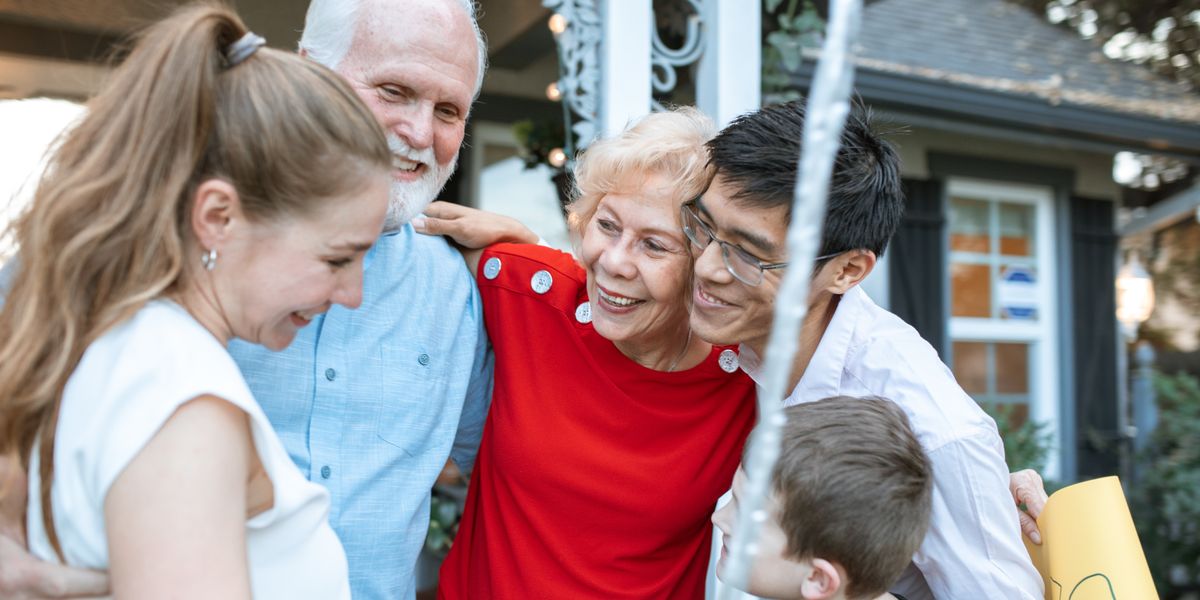
You have given this tour a thousand times. Lobby, dining room, the model apartment with the good light, the courtyard. And somewhere around the activity calendar, the daughter stops and asks the real question: "How will they know who my dad is?"
Most communities answer with a sentence. "We really get to know every resident here." The daughter nods. She has heard the same sentence at the last three places.
This piece is for you, the sales director, marketing director or community relations lead: the person who has to make that promise in the lobby, often before you have been in the job a year. I want to make the case that the best answer to the daughter is not a better sentence. It is showing her how it actually happens, and it only works if it is real.
The question under every tour
Families arrive carrying a lot. Research on families placing a relative with dementia finds loss, guilt and relief arriving together, and a strong wish that their person's individual needs will be respected.1 In a JAMA study, caregivers' depressive symptoms were no lower after their relative moved into a facility than before.2 The move doesn't end their worry. It changes its shape.
When families are asked what they want once their person has moved in, a consistent answer is news about ordinary life, without having to ask. That came through clearly from relatives in a Swedish study during the pandemic visiting bans.3 And in a US study, families who communicated more often with staff rated their relative's quality of life higher.4
So the daughter isn't asking about amenities. She's asking whether, six months from now, she will still feel like her father is a person here and not a room number.
The daughter has heard "we know every resident" three times this week. Show her how it happens and she will remember you.
What word of mouth is really made of
The sales-funnel numbers are familiar to you: roughly 9 to 10 percent of assisted living inquiries become move-ins, and 12 to 14 percent in memory care.5 The industry also believes referrals from families and professionals are the best-converting lead source of all. I believe that too, but in fairness, the figures behind it mostly come from vendors who sell sales software, not from independent research.
What generates those referrals is less mysterious. A family tells a friend about a community when something specific happened: the aide who knew their mom's favorite hymn, the voice note from Dad that made their week, the staff member who said "he told us about the farm." Specific stories travel. Slogans don't. (We wrote more about this in family satisfaction is the new occupancy strategy.)
Show the process, not the slogan
On a tour, show the daughter three things:
- How you learn the story. Not "we do an intake," but what happens in the first weeks: who sits down with a new resident, what gets asked, how families add what they know.
- How it reaches the person on shift. The most honest thing you can show is a card by a door or a briefing an aide actually reads. If it lives in a binder in the nurse's office, she will find that out eventually.
- How she will hear about his days. A newsletter built from residents' own words, a way to listen to his stories, a way to send him a message. Everyday life, without having to call and ask.
Consent first, every time
This is where marketing gets into trouble, so let me be direct. A resident's story told to the care team, or to their family, is not permission to put it in a brochure, a Facebook post or a tour script. Using it there needs its own clear, recorded consent from the resident, or from their legal representative if they can no longer decide.
The research gives a reason to be careful beyond the legal one. In a US pilot in 16 nursing homes, residents actually became less willing to share their life story books with others after making them.6 People feel protective of their stories. Long-term care ombudsmen, rightly, watch for anything that looks like residents being used for marketing. A story program that serves residents first will earn you far more trust than one that feeds your social calendar.
Never fake it
There is a temptation in this industry to stage things: a stock photo of a smiling resident with a made-up quote, a "resident story" written by an agency, a testimonial nobody actually said. Families are better at spotting this than we think, and the cost is high. If the first thing a daughter finds after move-in is that the story you showed her wasn't real, you have lost her trust and, likely, her referral.
We hold ourselves to the same rule. Porchlight is a young, founder-led company, and you will not find invented customers, logos or testimonials on our site. When we show how Porchlight works, we use a demo community that is clearly labeled as a demo.
The handoff after move-in
You often know more about a new resident's family than anyone else in the building. You heard about the farm, the late wife, the son who calls every Sunday, the daughter who is carrying the guilt. Then the lease is signed, and that knowledge tends to stay in your CRM notes.
Make the handoff deliberate. In the first week, sit down with the activity director and the resident care lead and pass on what the family told you, with the family's blessing. Two minutes of "here is who he is and what his daughter is worried about" can save a month of misunderstanding. And it keeps the promise you made in the lobby, which is the only kind of promise that turns into a referral.
Where Porchlight fits on a tour
Porchlight gives you something true to show. Residents record their own stories by tapping one button on a tablet and answering questions read aloud. From those stories, staff get a short briefing and a first-shift card for new or agency aides, and each resident can have a printable "About me" door card, which the resident approves before it goes up. The coordinator gets a weekly Monday digest of new stories, and a community newsletter can be built from what residents shared. Families get a private page to listen, download recordings, suggest questions, and send voice notes back that their person can play.
For tours, there is a public demo community you can walk a family through on a tablet: a resident's recordings becoming a staff briefing, a door card and a family page, without exposing a single real resident. For communities, plans are sales-led, and residents' families never pay.
What we do not claim: Porchlight is not therapy, does not improve memory, and we do not have outcome numbers to put in your brochure. What it gives you is a real answer to the daughter's question.
Something to try on your next tour
When the family asks how you will get to know their person, turn it around: "Tell me one thing about your dad that you would want every aide here to know." Write it down in front of them. After move-in, make sure it ends up somewhere an aide will see it, and tell the family when it does. That is a referral in the making, and it is true.
And if a family asks a question you can't honestly answer yes to, like whether every aide will know their dad by name in the first week, say what you actually do and what you are working on. Families have spent months hearing polished answers. A straight one is memorable, and it sets up a relationship where they believe you later, when it matters more.
Show families how their person will be known
Walk through the demo community a family would see: briefing, door card and family page.
Explore a live demo Book a demoSources & notes
- Graneheim UH, et al. Scandinavian Journal of Caring Sciences 2014. PubMed 23578033
- Schulz R, et al. JAMA 2004. PubMed 15328328
- Eriksson E, Hjelm K. BMC Geriatrics 2022. PubMed 36008775
- Roberts AR, Ishler KJ. The Gerontologist 2018. PubMed 28977636
- Creating Results, 2026 senior living sales benchmarks. creatingresults.com
- Ejaz FK, Rose M, Polk M. Journal of Applied Gerontology 2022;41(1):124-133. doi:10.1177/07334648211008682
Scenarios marked as illustrative are not real named individuals. Porchlight does not fabricate customers, testimonials, or outcome metrics. Podcast quotes are lightly trimmed of filler words; ellipses mark the cuts.