The short answer
- For people living with dementia, the best review (Cochrane, 22 trials, 1,972 people) found reminiscence therapy's effects to be inconsistent, often small, and dependent on setting and format.1
- There is no important overall effect on quality of life, but care homes probably see a slight benefit, one-to-one sessions probably help mood slightly, and groups probably help communication slightly.1
- Cognitive gains are very small and of doubtful clinical importance. Reminiscence does not treat or slow dementia.1
- Joint groups with family carers (REMCARE) found no benefit and more carer anxiety.2
- Effects on depression are larger in older adults without dementia, and one trial suggests plain human contact carries much of the benefit.3,4
Reminiscence therapy for dementia is one of the most widely used activities in senior living, and one of the most over-sold. Blogs promise better memory and fewer behaviors. The research says something more modest and more useful, and knowing it will help you design better sessions and speak honestly to families.
This page walks through the evidence outcome by outcome, including the trials that found nothing. For what reminiscence therapy is and how to run it, start with our complete guide to reminiscence therapy.
What counts as reminiscence therapy in the research
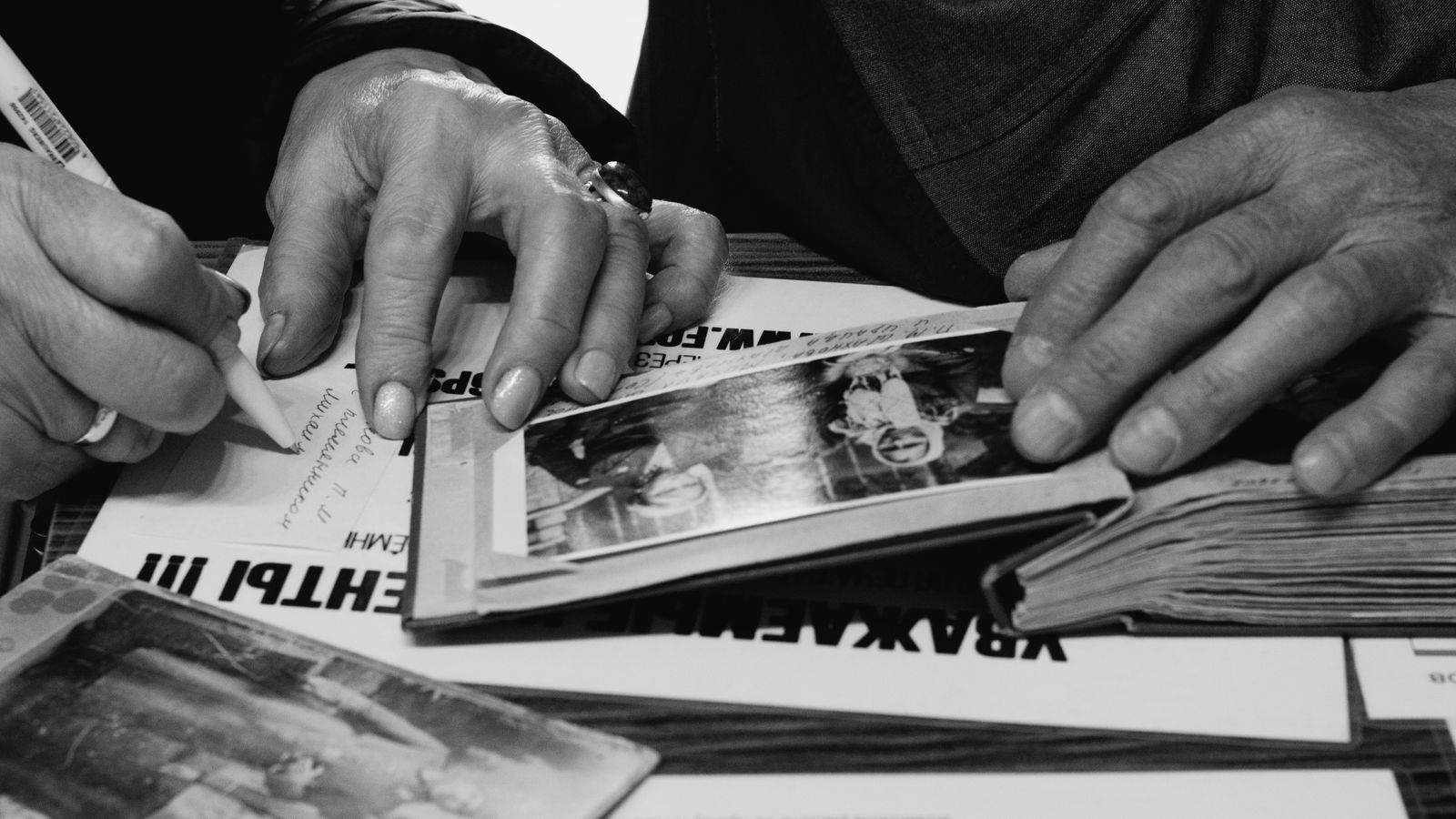
The Cochrane review defines reminiscence therapy as "the discussion of memories and past experiences with other people using tangible prompts such as photographs or music to evoke memories and stimulate conversation."1 Note the words with other people. In the trials, reminiscence is a social activity led by someone.
That covers weekly groups, one-to-one sessions, sessions with family carers and life story books. The Cochrane authors note that this variety, plus poorly described protocols, is a big reason results are hard to compare.1 Structured life review is a distinct approach with its own evidence; see life review vs. reminiscence therapy.
The Cochrane review: reminiscence therapy for dementia, outcome by outcome
Woods and colleagues (2018) included 22 randomized controlled trials with 1,972 people with dementia. To count, a program had to run at least four weeks or six sessions and be compared with no treatment or a passive control. They graded the certainty of each finding using the GRADE system, which is where phrases like "probably" and "may" come from.1 An abridged version was published the same year.5
| Outcome | What the review found | Certainty |
|---|---|---|
| Quality of life, overall | No important effect (8 studies, 1,060 people) | Moderate |
| Quality of life, care homes | Probably a slight benefit (3 studies, 193 people) | Moderate |
| Quality of life, community | Little or no difference (5 studies, 867 people) | Moderate |
| Cognition | Very small benefit at end of treatment, "of doubtful clinical importance"; little or no difference at follow-up | High |
| Communication | May improve at end of treatment (inconsistent); probably a slight benefit at follow-up. Group formats: probable slight benefit | Low to moderate |
| Mood and depression | No clear overall effect. One-to-one reminiscence: probably a slight benefit (4 studies, 131 people) | Moderate for individual |
| Agitation, daily functioning, relationship quality | No clear effects | Varies |
| Harms to the person with dementia | No evidence of harmful effects | Not graded |
| Family carers in joint groups | Possible increase in carer anxiety at longer-term follow-up (2 studies); uncertain | Low |
The authors' own summary is worth quoting in full because it is so often paraphrased into something rosier: the effects are "inconsistent, often small in size and can differ considerably across settings and modalities."1
The most honest one-line summary of reminiscence therapy for dementia: it is pleasant, low-risk, and helps a little in some settings. It is not a treatment.
The cognition result, read carefully
The cognition finding is the most misquoted. It is high certainty, but what it shows with high certainty is a very small effect: about 1.9 points on the Mini-Mental State Examination at the end of treatment, with only low-quality evidence at follow-up.1 Telling a family that reminiscence "improves memory" goes beyond the data.
Setting and format change the picture
The more useful lesson from the Cochrane review is that where and how matters more than the label on the activity calendar.
- Care homes did better than community settings. The probable quality-of-life benefit appeared in residential care, not among people living at home.1 That is encouraging news for assisted living and memory care, with the caveat that it rests on three studies.
- One-to-one sessions are linked to mood. Individual reminiscence was probably associated with a slight improvement on depression scales, and a probable slight improvement in cognition.1
- Groups are linked to communication. Group reminiscence showed a probable slight benefit on communication, which fits what you see in a good circle: people talking to each other, not just to the facilitator.1
The mix matters. Our 8-week group session plan and our list of reminiscence activities are built with this in mind.
The trials that found nothing: REMCARE and RYCT
Two large trials tested a format that sounds ideal and found it did not work.
REMCARE randomized about 488 people with mild to moderate dementia living in the community, together with their family carers (71% of them spouses). The pairs attended joint reminiscence groups weekly for 12 weeks, then monthly for seven months, with two trained facilitators and volunteers following a manual.6,2 The result: no differences on primary or secondary outcomes. Carers in the reminiscence groups reported significantly more anxiety at 10 months. People with dementia who attended more sessions showed some benefit, but carers who attended more reported more caregiving stress. The authors wrote that the trial "does not provide support for the effectiveness or cost-effectiveness of joint reminiscence groups."2
A second trial of 291 pairs tested the Remembering Yesterday, Caring Today (RYCT) group program. It found no effect on either partner's quality of life, though carers reported slightly better relationship quality.7 Carers interviewed about RYCT groups described no respite from their relative, little focus on their own needs, and "additional stress and guilt" when they could not use new skills at home.8
What this means for families
Inviting families to take part is good. Assigning them homework or requiring joint sessions is a different thing, and the best evidence we have says it can add to carer stress. Give families the output of reminiscence, like stories and recordings, and let them join when they want to. A newer meta-analysis also found no reduction in caregiver burden from reminiscence.9
Why newer meta-analyses report bigger effects
If you search for this topic you will find recent meta-analyses with much larger numbers. One 2025 review of 24 trials reported a moderate effect on cognition.10 A 2026 review of 26 trials in people with cognitive impairment reported effects on cognition, depression and quality of life, but no effect on behavioral symptoms or caregiver burden.9 An earlier review that included non-randomized designs was also more favorable than Cochrane.11
These reviews pool more trials, but many are small, single-site and at high risk of bias, with looser inclusion rules than Cochrane. For anything you say to families, anchor on Cochrane and the 2025 umbrella review below.
The 2025 umbrella review: the whole field at once
Jiao and colleagues (2025) did something useful: instead of pooling trials, they reviewed the reviews. They found 21 systematic reviews and meta-analyses covering 246 randomized trials and 18,177 older adults.12
- Possible benefits: self-esteem, communication and interaction, functional activities, and loneliness.
- Not supported: well-being, agitation and apathy.
- Mixed: most other outcomes.
- The catch: the included reviews were rated "critically low" in quality overall on the AMSTAR-2 appraisal tool.
That last point is the headline. There is a lot of research on reminiscence, and most of it is not very good. The confident claims you see online are not earned.
Depression in older adults without dementia: a stronger, messier signal
The picture changes when you look at older adults whose memory is intact. Here the effects on depressive symptoms are consistently larger, especially for structured life review and for people who are already depressed.
| Review | Who | Reported finding |
|---|---|---|
| Bohlmeijer et al. 200313 | 20 controlled studies, late-life depressive symptoms | Large overall effect; larger in people with elevated symptoms than in those without |
| Bohlmeijer et al. 200714 | 15 studies, psychological well-being | Moderate effect; life review beat simple reminiscence; community settings beat nursing homes |
| Pinquart & Forstmeier 20123 | 128 studies, 9 outcomes | Moderate effects on ego-integrity and depression; small effects on social integration and other outcomes; largest depression effect for life-review therapy |
| Tam et al. 202115 | 31 studies, 1,829 cognitively intact older adults | Reduced depressive symptoms and improved life satisfaction (small to moderate) |
| Lin et al. 202416 | 42 trials, 3,361 depressed adults aged 60+ | Large effect after treatment, but high heterogeneity, many trials at high risk of bias, and follow-up effects not significant after correcting for publication bias |
Two caveats keep this honest. First, most of these participants did not have dementia, so the results do not transfer to a memory care neighborhood. Second, the quality problem shows up here too. Lin and colleagues found "the quality of many included studies was not optimal," and once they corrected for publication bias the longer-term benefit was no longer significant.16 A well-run trial of life review therapy with narrative-therapy elements in 202 adults with moderate depressive symptoms found moderate effects that held at three months, which is a more realistic benchmark.17
Note that the well-being meta-analysis found community settings did better than nursing homes, the opposite of the dementia result.14 Be wary of anyone who quotes a single number for "reminiscence therapy."
There is also a consistent dose signal. Two independent meta-analyses found programs lasting eight weeks or longer improved life satisfaction more than shorter ones.18,19 One-off interviews are not what the evidence tested.
Precious Memories: the human contact finding
If you read only one trial, read this one. In "Precious Memories," 86 residents of residential care homes were randomly assigned either to a structured, one-to-one autobiographical-memory program delivered by trained volunteers, or to unstructured visits from volunteers.4
Depressive symptoms, anxiety and loneliness improved equally in both groups. The structured program did help residents recall specific positive memories more, but that difference faded afterward.4
The plain reading: a large share of what helps is a person who shows up, sits down and listens. Structure is not worthless: in an older trial with newly relocated nursing-home residents, structured life review did better than friendly visits on depression.20 But the relationship is the part no program can skip. For any program, and for any technology that claims to support reminiscence, this is the finding to design around. We come back to it in digital reminiscence therapy.
Loneliness: promising, with caveats
A 2025 meta-analysis of 22 studies found reminiscence reduced loneliness in older adults. Both simple reminiscence and life review helped, group formats did better than individual ones, and professional facilitators did better than non-professionals.21 An erratum has since been published for that paper, so we report the direction of the findings rather than the effect sizes.
Other evidence pulls the other way. A 2026 meta-analysis of group reminiscence in nursing homes found no significant effect on loneliness, drawing mostly on non-randomized studies.22 In Precious Memories, loneliness improved just as much with unstructured visits.4 The umbrella review lists loneliness as a possible benefit resting on low-quality reviews.12
Taken together, if reminiscence helps with loneliness, it probably does so through facilitated, social delivery, not solitary recall. For more on loneliness in senior living generally, see Leaving the light on.
What NICE and US regulation actually say
NICE (UK). Guideline NG97 recommendation 1.4.3 reads: "Consider group reminiscence therapy for people living with mild to moderate dementia." NICE uses "consider" for weaker recommendations. By contrast, 1.4.2 says to "offer group cognitive stimulation therapy," and 1.4.1 says to offer "a range of activities to promote wellbeing that are tailored to the person's preferences."23 Note the word group, and note that reminiscence is one option in a range, not the whole program.
United States. Federal rules at 42 CFR 483.24(c) require Medicare- and Medicaid-certified nursing homes to provide an ongoing, person-centered activities program based on each resident's assessment, care plan and preferences.24 Reminiscence fits that requirement well, but the rule does not mandate reminiscence and does not endorse any product. Assisted living is regulated by the states, not by this federal rule, so check your own state's requirements.
Professional guidance agrees on tone. The Alzheimer's Association puts it simply: "The goal is connection, not testing memory."25 The Alzheimer's Society says that if a memory brings up sadness, the person "should be supported to express their feelings."26 Our guide to distress in reminiscence sessions covers what that looks like in practice.
What the research means for your community
Put together, this is a practical playbook, not a miracle cure.
- Frame reminiscence as connection and person-centered care. Not as memory training, and never as a dementia treatment.1
- Offer both formats. One-to-one time for mood and dignity, small groups for conversation and communication.1
- Keep a person in the room. Precious Memories suggests attention itself is a large part of the benefit.4
- Run it for at least eight weeks, then keep going. Longer programs did better on life satisfaction.18,19
- Involve families without adding burden. Share stories with them; do not require joint sessions.2,8
- Use the life story itself. Life story books improved relatives' ratings of their relationship and staff knowledge and attitudes toward residents, even where resident outcomes faded.27,28 That is a real, defensible benefit for a community.
- Phrase prompts as invitations. "Tell me about the kitchen you grew up in" rather than "Do you remember your mother's recipes?" Our 120 reminiscence questions are written this way.
Where Porchlight fits
Nothing in this research says a tablet can replace the person across the table, and Porchlight is not therapy. What it does is take on the labor that makes consistent, individual reminiscence hard to sustain. A resident taps one large button, hears a life question read aloud and sees it in large type, and talks. The answer is recorded and transcribed. The questions come from a bank of more than 800 written by people and organized by life chapter, any question can be skipped with one tap, and nothing is scored.
The research above says the benefits live in human attention, so the product is built to feed it: staff get a "Know Your Resident" briefing with conversation starters and story highlights, families get a private page to listen and record voice replies, and a printable story-session guide lets you run a small group where staff act as a warm audience. The listening is still yours to do.
Frequently asked questions
Does reminiscence therapy work for dementia?
Partly. The 2018 Cochrane review of 22 randomized trials found effects that were inconsistent, often small, and different across settings and formats: no important overall effect on quality of life, but probable slight benefits in care homes, for mood in one-to-one sessions, and for communication in groups. It is a low-risk activity, not a treatment for dementia.
Can reminiscence therapy improve memory in people with dementia?
Not in any meaningful way. The Cochrane review found a very small benefit on cognition that the authors called of doubtful clinical importance, with little or no difference at follow-up. Run reminiscence for connection and enjoyment, not as memory training.
Is reminiscence therapy better one-to-one or in groups?
It depends on what you are hoping for. In people with dementia, one-to-one reminiscence was probably linked to a slight improvement in mood, and group reminiscence to a probable slight improvement in communication. Joint groups that included family carers did not improve quality of life and were linked to more carer anxiety and stress.
Does reminiscence therapy help with depression in older adults?
For older adults without dementia, several meta-analyses found moderate to large reductions in depressive symptoms, especially with structured life review and in people already depressed. The caveat is quality: many trials are small and at high risk of bias, and a 2024 analysis found the longer-term effect was not significant after correcting for publication bias.
Does NICE recommend reminiscence therapy for dementia?
NICE guideline NG97 says to consider group reminiscence therapy for people living with mild to moderate dementia. That is a weaker recommendation than its advice to offer group cognitive stimulation therapy, and it applies to group sessions specifically.
Can reminiscence therapy cause harm?
The Cochrane review found no evidence of harm to people with dementia. The documented downsides are for family carers in joint group programs, who reported more anxiety and caregiving stress, and the practical risk that a memory brings back grief or distress. Those moments call for support, not a push for more detail.
Make the human part easier to sustain
See how Porchlight handles the preparation and record-keeping so your staff can spend their time listening.
Explore a live demo Book a demoSources & notes
- Woods B, O'Philbin L, Farrell EM, Spector AE, Orrell M (2018). Reminiscence therapy for dementia. Cochrane Database of Systematic Reviews 3:CD001120. PMID 29493789. doi:10.1002/14651858.CD001120.pub3
- Woods RT, Orrell M, Bruce E, Edwards RT, Hoare Z, Hounsome B, et al. (2016). REMCARE: pragmatic multi-centre randomised trial of reminiscence groups for people with dementia and their family carers: effectiveness and economic analysis. PLoS One 11(4):e0152843. PMID 27093052. doi:10.1371/journal.pone.0152843
- Pinquart M, Forstmeier S (2012). Effects of reminiscence interventions on psychosocial outcomes: a meta-analysis. Aging & Mental Health 16(5):541-58. PMID 22304736. doi:10.1080/13607863.2011.651434
- Westerhof GJ, Korte J, Eshuis S, Bohlmeijer ET (2018). Precious memories: a randomized controlled trial on the effects of an autobiographical memory intervention delivered by trained volunteers in residential care homes. Aging & Mental Health 22(11):1494-1501. PMID 28929782. doi:10.1080/13607863.2017.1376311
- O'Philbin L, Woods B, Farrell EM, Spector AE, Orrell M (2018). Reminiscence therapy for dementia: an abridged Cochrane systematic review of the evidence from randomized controlled trials. Expert Review of Neurotherapeutics 18(9):715-727. PMID 30092689. doi:10.1080/14737175.2018.1509709
- Woods RT, Bruce E, Edwards RT, Elvish R, Hoare Z, Hounsome B, et al. (2012). REMCARE: reminiscence groups for people with dementia and their family caregivers: effectiveness and cost-effectiveness pragmatic multicentre randomised trial. Health Technology Assessment 16(48). PMID 23211271. doi:10.3310/hta16480
- Charlesworth G, Burnell K, Crellin N, Hoare Z, Hoe J, Knapp M, et al. (2016). Peer support and reminiscence therapy for people with dementia and their family carers: a factorial pragmatic randomised trial. Journal of Neurology, Neurosurgery and Psychiatry 87(11):1218-1228. PMID 27521377. doi:10.1136/jnnp-2016-313736
- Melunsky N, Crellin N, Dudzinski E, Orrell M, Wenborn J, Poland F, et al. (2015). The experience of family carers attending a joint reminiscence group with people with dementia: a thematic analysis. Dementia (London) 14(6):842-59. PMID 24381218. doi:10.1177/1471301213516332
- Ni P, Wang F, Liu L, Zhang S, Li Q, Hu X (2026). Effects of reminiscence therapy for people living with cognitive impairment and their caregivers: a systematic review and meta-analysis. Journal of the American Medical Directors Association 27(1):105978. PMID 41205999. doi:10.1016/j.jamda.2025.105978
- Han Y, Zhu B, Huang D, Lan Y, Zhong H, Zhang Y, et al. (2025). Efficacy of reminiscence therapy in improving cognitive decline: a systematic review and meta-analysis. Neurological Sciences 46(3):1087-1101. PMID 39653883. doi:10.1007/s10072-024-07905-x
- Saragih ID, Tonapa SI, Yao CT, Saragih IS, Lee BO (2022). Effects of reminiscence therapy in people with dementia: a systematic review and meta-analysis. Journal of Psychiatric and Mental Health Nursing 29(6):883-903. PMID 35348260. doi:10.1111/jpm.12830
- Jiao Y, Huang K, Liu H, Gains H, Jia Y, Chen L (2025). Effectiveness of reminiscence therapy on multiple health outcomes for older adults: an umbrella review. BMC Geriatrics 25(1):847. PMID 41193992. doi:10.1186/s12877-025-06484-6
- Bohlmeijer E, Smit F, Cuijpers P (2003). Effects of reminiscence and life review on late-life depression: a meta-analysis. International Journal of Geriatric Psychiatry 18(12):1088-94. PMID 14677140. doi:10.1002/gps.1018
- Bohlmeijer E, Roemer M, Cuijpers P, Smit F (2007). The effects of reminiscence on psychological well-being in older adults: a meta-analysis. Aging & Mental Health 11(3):291-300. PMID 17558580. doi:10.1080/13607860600963547
- Tam W, Poon SN, Mahendran R, Kua EH, Wu XV (2021). The effectiveness of reminiscence-based intervention on improving psychological well-being in cognitively intact older adults: a systematic review and meta-analysis. International Journal of Nursing Studies 114:103847. PMID 33352435. doi:10.1016/j.ijnurstu.2020.103847
- Lin J, Zhao R, Li H, Lei Y, Cuijpers P (2024). Looking back on life: an updated meta-analysis of the effect of life review therapy and reminiscence on late-life depression. Journal of Affective Disorders 347:163-174. PMID 37995927. doi:10.1016/j.jad.2023.11.050
- Korte J, Bohlmeijer ET, Cappeliez P, Smit F, Westerhof GJ (2012). Life review therapy for older adults with moderate depressive symptomatology: a pragmatic randomized controlled trial. Psychological Medicine 42(6):1163-73. PMID 21995889. doi:10.1017/S0033291711002042
- Xu L, Li S, Yan R, Ni Y, Wang Y, Li Y (2023). Effects of reminiscence therapy on psychological outcome among older adults without obvious cognitive impairment: a systematic review and meta-analysis. Frontiers in Psychiatry 14:1139700. PMID 37065888. doi:10.3389/fpsyt.2023.1139700
- Lin CL, Arifin H, Janitra FE, Aini N, Jiang P, Han HM, Hsu WC (2026). Comparative effectiveness of reminiscence-based therapies on depressive symptoms and life satisfaction in older adults: a network meta-analysis of randomised controlled trials. Age and Ageing 55(3):afag075. PMID 41934513. doi:10.1093/ageing/afag075
- Haight BK, Michel Y, Hendrix S (1998). Life review: preventing despair in newly relocated nursing home residents: short- and long-term effects. International Journal of Aging and Human Development 47(2):119-42. PMID 9836092. doi:10.2190/A011-BRXD-HAFV-5NJ6
- Yang H, Zhong Q, Han B, Pu Y, He R, Huang K, et al. (2025). Effects of reminiscence therapy for loneliness in older adults: a systematic review and meta-analysis. Age and Ageing 54(5):afaf136. PMID 40434177. doi:10.1093/ageing/afaf136. An erratum was published: Age and Ageing 2026;55(6):afag196, PMID 42359778, doi:10.1093/ageing/afag196. We report direction of findings only.
- Li S, Chong MC, Che CC, Zhang X, Li L, Deng J (2026). Effects of group reminiscence on psychosocial outcomes among nursing home residents with intact cognition and mild cognitive impairment: a systematic review and meta-analysis. International Journal of Nursing Sciences 13(4):371-379. PMID 42521387. doi:10.1016/j.ijnss.2026.06.010
- National Institute for Health and Care Excellence (2018). Dementia: assessment, management and support for people living with dementia and their carers (NG97), recommendations 1.4.1-1.4.3. https://www.nice.org.uk/guidance/ng97/chapter/Recommendations
- 42 CFR § 483.24(c), Activities (81 FR 68859, Oct. 4, 2016). Applies to Medicare- and Medicaid-certified nursing homes (SNFs and NFs); assisted living is regulated by each state. https://www.ecfr.gov/current/title-42/chapter-IV/subchapter-G/part-483/subpart-B/section-483.24
- Alzheimer's Association (US). Reminiscence and reminiscence therapy. https://www.alz.org/help-support/caregiving/daily-care/reminiscence-and-reminiscence-therapy
- Alzheimer's Society (UK). Therapy and approaches for memory loss support (life story work, reminiscence work). https://www.alzheimers.org.uk/about-dementia/stages-and-symptoms/dementia-symptoms/approaches-therapy-memory-loss
- Subramaniam P, Woods B, Whitaker C (2014). Life review and life story books for people with mild to moderate dementia: a randomised controlled trial. Aging & Mental Health 18(3):363-75. PMID 24063317. doi:10.1080/13607863.2013.837144
- Elfrink TR, Zuidema SU, Kunz M, Westerhof GJ (2018). Life story books for people with dementia: a systematic review. International Psychogeriatrics 30(12):1797-1811. PMID 30017005. doi:10.1017/S1041610218000376
Porchlight is a conversation and life-story tool, not a medical device or a clinical treatment. This article is educational and is not medical advice. No fabricated customers, testimonials, or outcome metrics appear here.