The short answer
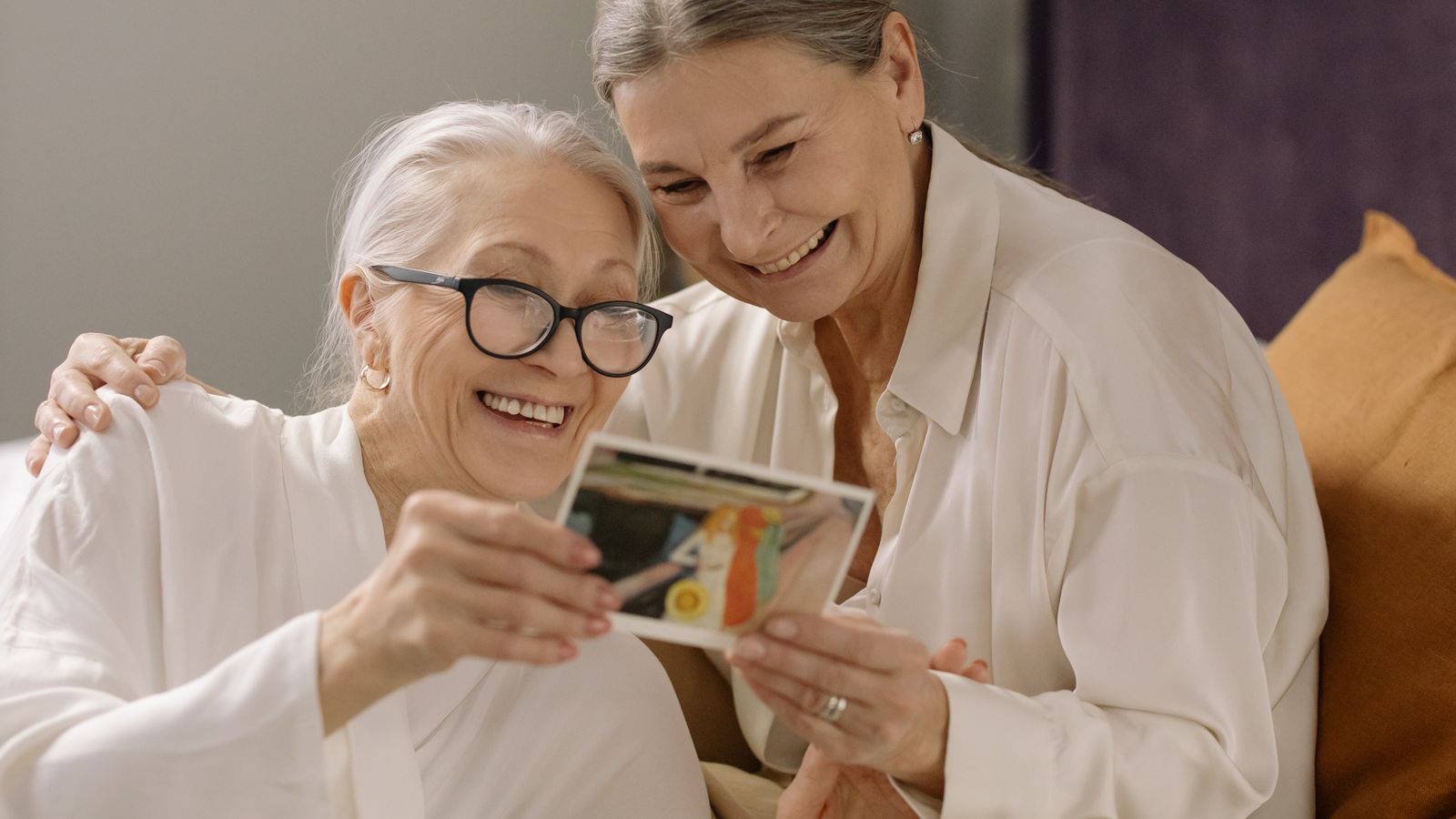
- Reminiscence therapy is guided conversation about a person's past, usually sparked by prompts such as photographs, music or familiar objects, and run one-to-one or in small groups.
- For older adults without dementia, especially those with depressive symptoms, structured reminiscence and life review show moderate benefits for mood and well-being, though many of the studies are low quality.
- For people with dementia, the best review found small, inconsistent effects: a probable slight lift in quality of life in care homes, in mood with one-to-one sessions, and in communication with groups. It does not treat dementia or meaningfully improve memory.
- Human connection seems to carry much of the benefit. The listener matters as much as the questions.
- To do it well: invite rather than quiz, follow the person's lead, make skipping easy, keep a steady weekly rhythm for at least eight weeks, and know when to stop and who to call.
Reminiscence therapy is one of the oldest and most widely used activities in senior living. Every activity director has run some version of it: a table of old photographs, a song from 1955, a question about a first job. It is also one of the most oversold. Blog posts promise it will sharpen memory, calm agitation and slow decline. The research says something more modest, and more useful.
This guide is the hub for our series on reminiscence therapy. Each section links to a deeper article if you want the detail.
You may also see it searched as "remembrance therapy." The clinical term is reminiscence therapy, and that is the one used in the research and in this guide.
What is reminiscence therapy?
The Cochrane review, the most rigorous summary of the dementia research, defines reminiscence therapy as "the discussion of memories and past experiences with other people using tangible prompts such as photographs or music to evoke memories and stimulate conversation."1 Note the two key parts: it is a discussion, so another person is involved, and it uses prompts.
The same review notes that reminiscence therapy "is implemented widely in a range of settings using a variety of formats," and that this variety is one reason the research is hard to pin down.1 A weekly slide-show group and a one-to-one talk over a wedding album are both called reminiscence therapy, but they are not the same intervention.
Reminiscence work and life story work
The UK Alzheimer's Society separates two related practices. Reminiscence work "involves encouraging a person with dementia to talk about a period, event or subject from their past." Life story work means "making a personal record of important experiences, people and places in their life," usually a book, album or digital record built with family or staff.2 One is a conversation. The other is a conversation that leaves something behind. A systematic review found life story work used with older people, people with learning disabilities and people with dementia, most often as life story books, and called its evidence base "immature."3
Types of reminiscence therapy
Researchers now describe reminiscence interventions on a ladder of rising structure and therapeutic intent: simple reminiscence, then life review, then life review therapy.4 Haight and Burnside argued as early as 1993 that reminiscence and life review "continue to be used interchangeably in the literature" but are "separate interventions," with different goals, roles and outcomes.5 Life story work sits alongside the ladder, because it can use any of the three to produce a lasting record.
| Approach | How structured | Main aim | Typical format | Who usually leads it |
|---|---|---|---|---|
| Simple reminiscence | Loose, often themed (school days, food, music) | Pleasure, connection, conversation | Groups or one-to-one | Activity staff, volunteers, family |
| Life review | Chronological, covers the whole life, includes hard memories | Weaving the life into a coherent, accepted story | One-to-one, several weekly sessions | A trained listener |
| Life review therapy | Highly structured, often combined with narrative or cognitive techniques | Treating depressive symptoms or distress | One-to-one or small group course | Mental-health professionals |
| Life story work | Varies; organized around producing a record | A book, album or recording that staff and family can use | Usually one-to-one, often with relatives | Staff, volunteers, family |
Life review has its roots in Robert Butler's 1963 paper, which recast looking back in old age as a normal and adaptive process rather than a sign of decline.6 We cover the history, Haight's structured life review, and the differences in depth in Life review vs. reminiscence therapy.
Reminiscence also varies by format. Individual sessions pair one resident with one listener. Group sessions bring several residents together around a theme. Joint or dyadic sessions bring a person with dementia together with a family carer. As you will see below, the format changes what the evidence shows.
What the evidence says about reminiscence therapy
The honest summary depends on who you are talking about. Here is the short version by population, with detail after the table. For a fuller walk through the dementia trials, see Reminiscence therapy for dementia: what the research actually shows.
| Who | What the best evidence shows | How sure we are |
|---|---|---|
| Older adults without dementia, with depressive symptoms | Moderate to large reductions in depressive symptoms, largest for life review therapy | Moderate. Many small studies with high risk of bias; long-term effects uncertain |
| Older adults without dementia, in general | Moderate gains in well-being and life satisfaction; life review beats simple reminiscence | Moderate |
| People with dementia | Small, inconsistent effects. Probable slight benefit to quality of life in care homes, mood with individual sessions, communication with groups. Cognitive benefit very small and of doubtful clinical importance | Moderate to high for the Cochrane findings |
| Family carers in joint groups | No benefit to quality of life; possible increase in carer anxiety and stress | Moderate (two large trials) |
| Loneliness | Promising in pooled analyses, especially in facilitated groups, but mixed across reviews | Low |
Older adults without dementia
This is where reminiscence has its strongest support. A 2003 meta-analysis of 20 controlled studies on late-life depression found a large overall effect, and a much larger one in people with elevated depressive symptoms than in those without.7 A later meta-analysis of 15 studies on psychological well-being found a moderate effect, with life review outperforming simple reminiscence, and people living in the community gaining more than people in residential care.8
The broadest review, pooling 128 studies, found moderate effects on ego integrity and depression and small effects on well-being and social integration, most holding at follow-up. The depression effect was largest for life review therapy.9 A 2021 review limited to cognitively intact older adults found smaller but still meaningful reductions in depressive symptoms and gains in life satisfaction.10
The caveats are real. A 2024 meta-analysis of 42 randomized trials in depressed adults aged 60 and over found a large effect, but it reported that "the quality of many included studies was not optimal, with a high risk of bias," and follow-up effects were not significant once publication bias was corrected for.11 One of the better trials, a pragmatic multi-site study of 202 adults with moderate depressive symptoms, found a moderate effect of life review therapy that largely held three months later.12
In nursing homes specifically, 256 newly admitted residents who completed a structured life review had lower depression and hopelessness a year later than those who received friendly visits.13
People with dementia
The 2018 Cochrane review pooled 22 randomized trials involving 1,972 people with dementia. Its conclusion is worth quoting whole: effects are "inconsistent, often small in size and can differ considerably across settings and modalities."1 In more detail:
- Quality of life: no important effect overall, but probably a slight benefit in care homes. Little or no difference in community settings.
- Cognition: a very small benefit "of doubtful clinical importance" at the end of treatment, with little or no difference at follow-up.
- Mood: no clear overall effect, but individual sessions were probably linked to a slight improvement in depressive symptoms.
- Communication: a possible benefit, with group formats showing a probable slight improvement.
- Agitation and daily functioning: no clear effect.
- Harm: "We found no evidence of any harmful effects on people with dementia."
Several newer meta-analyses report larger effects, but they pool smaller trials, many with a high risk of bias. An umbrella review of 21 reviews covering 246 trials rated the included reviews "critically low" in quality overall, and found possible benefits for self-esteem, communication and loneliness but no support for effects on well-being, agitation or apathy.14 For public claims, the Cochrane findings are the safer anchor.
What reminiscence therapy does not do
It does not treat, slow or reverse dementia. It does not restore memory in any clinically meaningful way. Its realistic value in dementia care is a modest, format-dependent lift in quality of life, mood or communication, plus the connection and knowledge that come from listening to someone's life.
Family carers and joint groups
Joint groups for people with dementia and their family carers sound ideal. Two large trials suggest caution. REMCARE, which randomized about 487 pairs to weekly joint groups followed by monthly sessions, found no differences on primary or secondary outcomes, and carers in the reminiscence groups reported significantly more anxiety. Carers who attended more reported more caregiving stress.15 A second trial of 291 pairs found no effect on quality of life for either partner, though carers reported slightly better relationship quality.16 Interviews with carers described losing their respite and feeling guilty about not using what they had learned at home.17 A 2026 meta-analysis found no effect of reminiscence therapy on caregiver burden.18
The human ingredient
The most important trial for anyone designing a program may be "Precious Memories." In 86 residential-care residents, a structured one-to-one autobiographical memory program run by trained volunteers was compared with unstructured volunteer visits. Depressive symptoms, anxiety and loneliness improved equally in both groups.19 The structured program helped people recall specific positive memories, though that edge did not last. The company itself did much of the work.
The loneliness research points the same way. A 2025 meta-analysis found that reminiscence reduced loneliness, with group formats outperforming individual ones and professional facilitators outperforming non-professionals.20 A 2026 review of group reminiscence in nursing homes, however, found no significant effect on loneliness.21 The fair reading: if reminiscence helps loneliness, it works through people, not prompts.
How to do reminiscence therapy: individual sessions
One-to-one reminiscence is where the dementia evidence points for mood, and it is the backbone of life review. It is also the hardest format to staff.
Set it up
- Pick a quiet, regular time when the resident is usually at their best.
- Keep it to a length they can enjoy. Community programs typically run sessions of about an hour;22 for people with dementia, shorter is usually better. CMS surveyor guidance describes activities for residents with dementia that are "short and repetitive, and that are stopped if the resident becomes overwhelmed."23
- Bring a prompt. A photograph, a song, a kitchen tool, a map of their hometown. The Alzheimer's Association lists "photos, music, familiar objects, scents, and places."24
Ask well
The single biggest lever is phrasing. The Alzheimer's Association puts it simply: "The goal is connection, not testing memory."24 Compare:
- Instead of "Do you remember your first car?" try "Tell me about the first car you drove."
- Instead of "What year did you get married?" try "What was your wedding day like?"
- Instead of "Who is this in the photo?" try "This looks like a happy day. What was going on?"
Quiz questions have a right answer, and a person who cannot find it has just failed in front of you. For a full bank of well-phrased prompts, see 120 reminiscence questions for seniors.
Follow, don't steer
Start with a gentle structure, often chronological, from childhood onward, which is how structured life review is organized.25 Then let the person wander. Haight's guidance is that the listener can "follow the lead of the reviewer" rather than working through every question. If the resident's version of events differs from the family's, let it stand. Correcting someone's memory rarely helps and often hurts; CMS guidance for nursing homes names "validating the resident's feelings and words" as an activity approach.23 (Note that trial evidence for validation therapy as a formal method is insufficient;26 the principle rests on practice consensus and regulatory guidance.)
Leave something behind
Life story books are where one-to-one reminiscence produces benefits beyond the resident. In a small randomized trial in care homes, life story books improved relatives' ratings of their relationship with the resident, and staff knowledge of and attitudes toward the resident, whether the book was co-created in sessions or made by relatives as a gift.27 A review of 14 studies found similar effects on caregiver relationships and staff attitudes, with a median of six individual sessions.28 Those same authors warn that "undertaking a life review requires training and supervision."27
Reminiscence therapy in groups
Group reminiscence is the format NICE names. Its dementia guideline says: "Consider group reminiscence therapy for people living with mild to moderate dementia."29 "Consider" is a weaker recommendation than the "offer" NICE gives to group cognitive stimulation therapy, but it is a recommendation. In the Cochrane data, groups showed a probable slight benefit to communication.1
What makes a good group:
- A theme each week. Hometown is the most common theme in community programs.22 School days, first jobs, food, dances and holidays all work.
- Small enough that everyone gets a turn. A quiet resident should not spend an hour listening to the same two voices.
- A facilitator who turns answers outward. "Margaret grew up on a farm too. Margaret, was your kitchen like that?" The connection between residents is the point.
We lay out a full eight-week plan, with themes, props, timings and facilitator scripts, in How to run a reminiscence group, and forty ready-to-run ideas in 40 reminiscence therapy activities.
How often, and for how long
Cochrane only included programs of at least four weeks or six sessions.1 Two separate meta-analyses in older adults without dementia found that programs of eight weeks or more improved life satisfaction more than shorter ones.30,31 A reasonable default is a weekly session for at least eight weeks, then keep going. A one-off afternoon is not a program.
How reminiscence fits the rules
If you work in a nursing home, federal rules at 42 CFR 483.24(c), surveyed as F679, require an ongoing, person-centered activities program based on each resident's assessment and preferences.32 CMS guidance says activities for residents with dementia should be individualized "based on the resident's previous lifestyle (occupation, family, hobbies)," and lists "reminiscing" among non-drug interventions in its pain management and behavioral health guidance.23 Assisted living is regulated by the states, not by these federal rules, so check your own state's activity and service-plan requirements.
Adapting reminiscence by dementia stage
Most trials cover mild to moderate dementia, so much of what follows is expert consensus rather than trial evidence.1,24
| Stage | What tends to work | Example prompt | Watch for |
|---|---|---|---|
| No dementia or mild | Open questions, chronological life review, co-writing a life story book, reflective questions | "Tell me about the town you grew up in. What did you learn there that stayed with you?" | Rumination on regrets; hard memories that need a gentle hand |
| Moderate | Recognition over recall: a photo, object or song in hand; simpler questions; offering choices | "Here's a picture of a kitchen like the ones back then. Did you like to cook, or were you the one who ate?" | Frustration when a word or name won't come; move on quickly |
| Severe | Sensory and emotional connection over story: music, touch, familiar scents, looking at photos together | Play a favorite hymn or dance tune and hold their hand | Overstimulation; read the face, not the words |
The Alzheimer's Association notes that "even in later stages, gestures like holding hands, listening to music, or viewing old photos offer comfort."24 At every stage the rule is the same: the goal is the moment of connection, not a correct answer.
Risks and safeguards
Reminiscence is low risk, and the Cochrane review found no evidence of harm to people with dementia.1 That is not the same as risk-free. The known risks, and what to do about them:
- Painful memories. Talking about the past can surface loss, war, abuse or displacement. The Alzheimer's Society advises that if a person becomes upset, they "should be supported to express their feelings," not hurried away from them.2 Pause, name the feeling, offer to change topic or stop, and don't end on the hard note.
- Trauma is clinical territory. Life review therapy has been used with Holocaust survivors, but as a clinician-delivered therapy with screening, not an activity.33 Survivors can become more vulnerable in very old age.34 Never go looking for traumatic material in an activity session.
- Unhelpful styles of reminiscing. Not all looking back is good for people. Obsessive reminiscence, dwelling on guilt and bitterness, is less common in people who age well,35 and reminiscing to revive old grievances is linked to lower well-being.36 If a resident keeps circling the same grievance, gently turn toward what they are proud of or how they coped.
- Privacy. People share things they would not want in a book or read by the family. Researchers studying life story work put it bluntly: "You have to be mindful of whose story it is."37 Ask before sharing, and let the resident decide what goes in any record.
- Overuse and carer burden. Life story work "may be overused" with people with dementia,37 and joint groups can stress family carers.15 Offer reminiscence as one activity among many, and keep family involvement optional.
When to bring in a clinician: any mention of wanting to die or of self-harm, any disclosure of current abuse (which may trigger mandatory reporting), distress that persists after a session, signs of trauma re-experiencing, or low mood that lasts. These triggers reflect practice consensus rather than trial evidence. We go through scripts and escalation steps in When memories hurt: handling distress in reminiscence sessions.
How to measure a reminiscence program
Most of this literature overstates its effects because it relies on uncontrolled before-and-after comparisons.14 If you want to know whether your program is helping, a few free or low-cost tools go a long way:
| What you want to know | Tool | Notes |
|---|---|---|
| Mood, residents who can self-report | Geriatric Depression Scale, 15-item short form | Yes/no questions; widely used38 |
| Mood, residents with dementia | Cornell Scale for Depression in Dementia | Rated by a clinician from interviews with the person and a caregiver39 |
| Quality of life with dementia | QoL-AD | 13 items, self and proxy versions; used in the major trials40 |
| Loneliness | Three-item loneliness scale | Short enough for routine use41 |
| Engagement in groups | Staff-observed engagement log or a structured observation measure | Attendance, minutes, observed engagement42 |
Measure at the start, at eight to twelve weeks, and at six months. If you can, compare with a unit or wing that has not started yet. Do not use a memory test such as the MMSE as your success measure: cognitive change from reminiscence is tiny and is not the goal.1 Report what you find honestly, including when nothing moves.
Where technology fits in reminiscence therapy
Tablets, digital life story books, virtual reality and conversational tools can make reminiscence easier to run. A 2014 review found that technology gives easy access to "rich and engaging multimedia reminiscence materials" and helps people with dementia "take ownership of conversations."43 The best-known system, CIRCA, was designed so the computer acts as a "third participant" supporting a conversation between two people, not a replacement for one of them.44 Group CIRCA sessions and a home iPad reminiscence app both showed improvements, but in studies without control groups.45,46
The efficacy evidence is thin. The most recent meta-analysis of digital reminiscence in dementia found no significant effect on cognition, mood, quality of life or communication, and only a possible benefit on behavioral symptoms from a few small studies. It noted that "personalized and socially engaging formats appeared most associated with favorable outcomes."47 A review of virtual reality reminiscence found stimuli tied to users' youth worked best.48 We could not find any randomized trial of AI-driven conversational reminiscence with outcomes measured in residents.
The takeaway: use technology to lower the labor and personalize the prompts, and design it so people end up talking to people. More on this in Digital reminiscence therapy: what tablets, recordings and AI can (and can't) do.
Where Porchlight fits
Porchlight is a tool for the part of reminiscence that is hardest to sustain: structured, individual, regular conversation with every resident. It is not therapy, and it does not replace staff, visits or clinicians. Here is what it does.
- One button for the resident. A resident taps one large button on a tablet. A life question is read aloud and shown in large type. They talk, and the answer is recorded and transcribed.
- Questions written by people. A curated bank of more than 800 life-story questions, organized by life chapter and starting in childhood. The resident or a staff member can choose a topic.
- The resident stays in charge. Any question can be skipped with one tap. Answered questions never repeat. Nothing is scored or graded.
- Families listen and join in. Family members get a private page to hear recordings and record voice replies, and can add their own questions and photos, which become prompts.
- Staff get something usable. A "Know Your Resident" briefing with conversation starters and story highlights, a weekly digest, and a printable life-story biography.
- A simple daily check-in. A one-tap mood check-in each day; a low answer emails a coordinator. It is a prompt to check on someone, not a validated clinical scale.
- Room for groups. A printable story-session run-of-show for small groups, where each resident records with a QR card and staff act as a warm audience.
What it does not do: it does not listen for distress in what residents say, so a staff member still needs to review recordings and know each resident. Given what the Precious Memories trial showed about human contact, the best use of Porchlight is to feed conversations between people: the aide who uses a briefing to ask about the family farm, the daughter who records a reply, the coordinator who reads one story aloud at a group. We make no claims about clinical outcomes.
Frequently asked questions
What is the main goal of reminiscence therapy?
The main goal is connection and well-being: helping a person share memories with someone who is interested, which can support mood, sense of self and communication. It is not meant to restore memory or treat dementia.
Does reminiscence therapy work for dementia?
Modestly. The 2018 Cochrane review of 22 trials found small, inconsistent effects: a probable slight benefit to quality of life in care homes, to mood with one-to-one sessions and to communication in groups. Any benefit to memory was very small and of doubtful clinical importance.
What is the difference between reminiscence therapy and life review?
Simple reminiscence is loosely structured recall for pleasure and connection, often in groups. Life review is a structured, chronological, one-to-one process that covers the whole life, including hard memories, and aims to fit them into a coherent story. Life review therapy is a more clinical version used for depression.
Can reminiscence therapy upset someone?
Yes, sometimes. Memories of loss, war or abuse can surface. Trials have not found evidence of harm to people with dementia, but facilitators should support the person's feelings, offer to change topic or stop, never push for detail, and involve a nurse or clinician if distress persists or the person mentions self-harm or abuse.
How often should reminiscence sessions be held?
Weekly is a sensible default. Research reviews included programs of at least four weeks or six sessions, and two meta-analyses found that programs of eight weeks or more improved life satisfaction more than shorter ones.
What materials are used in reminiscence therapy?
Anything that sparks a memory: family photographs, music from the person's youth, familiar objects, scents, recipes and pictures of places they lived. Prompts tied to the person's own history tend to work best.
Make one-to-one reminiscence routine
See the one-button resident app, the family listening page and the staff briefing in a fifteen-minute walkthrough.
Explore a live demo Book a demoSources & notes
- Woods B, O'Philbin L, Farrell EM, Spector AE, Orrell M (2018). Reminiscence therapy for dementia. Cochrane Database of Systematic Reviews 3:CD001120. PMID 29493789. doi:10.1002/14651858.CD001120.pub3
- Alzheimer's Society (UK). Therapy and approaches for memory loss support (life story work, reminiscence work). alzheimers.org.uk/about-dementia/stages-and-symptoms/dementia-symptoms/approaches-therapy-memory-loss (accessed September 2026).
- McKeown J, Clarke A, Repper J (2006). Life story work in health and social care: systematic literature review. J Adv Nurs 55(2):237-47. PMID 16866815. doi:10.1111/j.1365-2648.2006.03897.x
- Webster JD, Bohlmeijer ET, Westerhof GJ (2010). Mapping the future of reminiscence: a conceptual guide for research and practice. Research on Aging. doi:10.1177/0164027510364122
- Haight BK, Burnside I (1993). Reminiscence and life review: explaining the differences. Arch Psychiatr Nurs 7(2):91-98. PMID 8494406. doi:10.1016/s0883-9417(09)90007-3
- Butler RN (1963). The life review: an interpretation of reminiscence in the aged. Psychiatry 26:65-76. PMID 14017386. doi:10.1080/00332747.1963.11023339
- Bohlmeijer E, Smit F, Cuijpers P (2003). Effects of reminiscence and life review on late-life depression: a meta-analysis. Int J Geriatr Psychiatry 18(12):1088-94. PMID 14677140. doi:10.1002/gps.1018
- Bohlmeijer E, Roemer M, Cuijpers P, Smit F (2007). The effects of reminiscence on psychological well-being in older adults: a meta-analysis. Aging Ment Health 11(3):291-300. PMID 17558580. doi:10.1080/13607860600963547
- Pinquart M, Forstmeier S (2012). Effects of reminiscence interventions on psychosocial outcomes: a meta-analysis. Aging Ment Health 16(5):541-58. PMID 22304736. doi:10.1080/13607863.2011.651434
- Tam W, Poon SN, Mahendran R, Kua EH, Wu XV (2021). The effectiveness of reminiscence-based intervention on improving psychological well-being in cognitively intact older adults: a systematic review and meta-analysis. Int J Nurs Stud 114:103847. PMID 33352435. doi:10.1016/j.ijnurstu.2020.103847
- Lin J, Zhao R, Li H, Lei Y, Cuijpers P (2024). Looking back on life: an updated meta-analysis of the effect of life review therapy and reminiscence on late-life depression. J Affect Disord 347:163-174. PMID 37995927. doi:10.1016/j.jad.2023.11.050
- Korte J, Bohlmeijer ET, Cappeliez P, Smit F, Westerhof GJ (2012). Life review therapy for older adults with moderate depressive symptomatology: a pragmatic randomized controlled trial. Psychol Med 42(6):1163-73. PMID 21995889. doi:10.1017/S0033291711002042
- Haight BK, Michel Y, Hendrix S (1998). Life review: preventing despair in newly relocated nursing home residents short- and long-term effects. Int J Aging Hum Dev 47(2):119-42. PMID 9836092. doi:10.2190/A011-BRXD-HAFV-5NJ6
- Jiao Y, Huang K, Liu H, Gains H, Jia Y, Chen L (2025). Effectiveness of reminiscence therapy on multiple health outcomes for older adults: an umbrella review. BMC Geriatr 25(1):847. PMID 41193992. doi:10.1186/s12877-025-06484-6
- Woods RT, Orrell M, Bruce E, Edwards RT, Hoare Z, Hounsome B, et al. (2016). REMCARE: pragmatic multi-centre randomised trial of reminiscence groups for people with dementia and their family carers: effectiveness and economic analysis. PLoS One 11(4):e0152843. PMID 27093052. doi:10.1371/journal.pone.0152843
- Charlesworth G, Burnell K, Crellin N, Hoare Z, Hoe J, Knapp M, et al. (2016). Peer support and reminiscence therapy for people with dementia and their family carers: a factorial pragmatic randomised trial. J Neurol Neurosurg Psychiatry 87(11):1218-1228. PMID 27521377. doi:10.1136/jnnp-2016-313736
- Melunsky N, Crellin N, Dudzinski E, Orrell M, Wenborn J, Poland F, et al. (2015). The experience of family carers attending a joint reminiscence group with people with dementia: a thematic analysis. Dementia (London) 14(6):842-59. PMID 24381218. doi:10.1177/1471301213516332
- Ni P, Wang F, Liu L, Zhang S, Li Q, Hu X (2026). Effects of reminiscence therapy for people living with cognitive impairment and their caregivers: a systematic review and meta-analysis. J Am Med Dir Assoc 27(1):105978. PMID 41205999. doi:10.1016/j.jamda.2025.105978
- Westerhof GJ, Korte J, Eshuis S, Bohlmeijer ET (2018). Precious memories: a randomized controlled trial on the effects of an autobiographical memory intervention delivered by trained volunteers in residential care homes. Aging Ment Health 22(11):1494-1501. PMID 28929782. doi:10.1080/13607863.2017.1376311
- Yang H, Zhong Q, Han B, Pu Y, He R, Huang K, et al. (2025). Effects of reminiscence therapy for loneliness in older adults: a systematic review and meta-analysis. Age Ageing 54(5):afaf136. PMID 40434177. doi:10.1093/ageing/afaf136. Erratum: Age Ageing 2026;55(6):afag196, PMID 42359778.
- Li S, Chong MC, Che CC, Zhang X, Li L, Deng J (2026). Effects of group reminiscence on psychosocial outcomes among nursing home residents with intact cognition and mild cognitive impairment: a systematic review and meta-analysis. Int J Nurs Sci 13(4):371-379. PMID 42521387. doi:10.1016/j.ijnss.2026.06.010
- Shin E, Kim M, Kim S, Sok S (2023). Effects of reminiscence therapy on quality of life and life satisfaction of the elderly in the community: a systematic review. BMC Geriatr 23(1):420. PMID 37430198. doi:10.1186/s12877-023-04001-1
- Centers for Medicare & Medicaid Services. State Operations Manual, Appendix PP, Guidance to Surveyors for Long Term Care Facilities (Rev. 225, 08-08-24): F679 Activities; F697 Pain management; F741 Behavioral health. Later revisions may exist.
- Alzheimer's Association (US). Reminiscence and reminiscence therapy. alz.org/help-support/caregiving/daily-care/reminiscence-and-reminiscence-therapy (accessed September 2026).
- Haight BK, Haight BS (2007). The Handbook of Structured Life Review. Baltimore: Health Professions Press. Book. Session count and LREF details as described in secondary summaries of the handbook.
- Neal M, Barton Wright P (2003). Validation therapy for dementia. Cochrane Database Syst Rev (3):CD001394. PMID 12917907. doi:10.1002/14651858.CD001394
- Subramaniam P, Woods B, Whitaker C (2014). Life review and life story books for people with mild to moderate dementia: a randomised controlled trial. Aging Ment Health 18(3):363-75. PMID 24063317. doi:10.1080/13607863.2013.837144
- Elfrink TR, Zuidema SU, Kunz M, Westerhof GJ (2018). Life story books for people with dementia: a systematic review. Int Psychogeriatr 30(12):1797-1811. PMID 30017005. doi:10.1017/S1041610218000376
- National Institute for Health and Care Excellence (2018). Dementia: assessment, management and support for people living with dementia and their carers (NG97), recommendations 1.4.1-1.4.3. nice.org.uk/guidance/ng97
- Xu L, Li S, Yan R, Ni Y, Wang Y, Li Y (2023). Effects of reminiscence therapy on psychological outcome among older adults without obvious cognitive impairment: a systematic review and meta-analysis. Front Psychiatry 14:1139700. PMID 37065888. doi:10.3389/fpsyt.2023.1139700
- Lin CL, Arifin H, Janitra FE, Aini N, Jiang P, Han HM, Hsu WC (2026). Comparative effectiveness of reminiscence-based therapies on depressive symptoms and life satisfaction in older adults: a network meta-analysis of randomised controlled trials. Age Ageing 55(3):afag075. PMID 41934513. doi:10.1093/ageing/afag075
- 42 CFR § 483.24(c), Activities (81 FR 68859, October 4, 2016). Electronic Code of Federal Regulations. Applies to Medicare/Medicaid-certified nursing facilities.
- Forstmeier S, Zimmermann S, van der Hal E, Auerbach M, Kleinke K, Maercker A, Brom D (2023). Effect of Life Review Therapy for Holocaust Survivors: a randomized controlled trial. J Trauma Stress 36(3):628-641. PMID 37155933. doi:10.1002/jts.22933
- Zimmermann S, Forstmeier S (2020). From fragments to identity: reminiscence, life review and well-being of Holocaust survivors. An integrative review. Aging Ment Health 24(4):525-549. PMID 30522330. doi:10.1080/13607863.2018.1525608
- Wong PT, Watt LM (1991). What types of reminiscence are associated with successful aging? Psychol Aging 6(2):272-9. PMID 1863396. doi:10.1037//0882-7974.6.2.272
- Cappeliez P, O'Rourke N (2006). Empirical validation of a model of reminiscence and health in later life. J Gerontol B Psychol Sci Soc Sci 61(4):P237-44. PMID 16855036. doi:10.1093/geronb/61.4.p237
- McKeown J, Ryan T, Ingleton C, Clarke A (2015). 'You have to be mindful of whose story it is': the challenges of undertaking life story work with people with dementia and their family carers. Dementia (London) 14(2):238-56. PMID 24339102. doi:10.1177/1471301213495864
- Yesavage JA, Brink TL, Rose TL, Lum O, Huang V, Adey M, Leirer VO (1982). Development and validation of a geriatric depression screening scale: a preliminary report. J Psychiatr Res 17(1):37-49. PMID 7183759. doi:10.1016/0022-3956(82)90033-4
- Alexopoulos GS, Abrams RC, Young RC, Shamoian CA (1988). Cornell Scale for Depression in Dementia. Biol Psychiatry 23(3):271-84. PMID 3337862. doi:10.1016/0006-3223(88)90038-8
- Logsdon RG, Gibbons LE, McCurry SM, Teri L (2002). Assessing quality of life in older adults with cognitive impairment. Psychosom Med 64(3):510-9. PMID 12021425. doi:10.1097/00006842-200205000-00016
- Hughes ME, Waite LJ, Hawkley LC, Cacioppo JT (2004). A short scale for measuring loneliness in large surveys: results from two population-based studies. Res Aging 26(6):655-672. PMID 18504506. doi:10.1177/0164027504268574
- Cohen-Mansfield J, Hai T, Comishen M (2017). Group engagement in persons with dementia: the concept and its measurement. Psychiatry Res 251:237-243. PMID 28214783. doi:10.1016/j.psychres.2017.02.013
- Lazar A, Thompson H, Demiris G (2014). A systematic review of the use of technology for reminiscence therapy. Health Educ Behav 41(1 Suppl):51S-61S. PMID 25274711. doi:10.1177/1090198114537067
- Purves BA, Phinney A, Hulko W, Puurveen G, Astell AJ (2015). Developing CIRCA-BC and exploring the role of the computer as a third participant in conversation. Am J Alzheimers Dis Other Demen 30(1):101-7. PMID 24928817. doi:10.1177/1533317514539031
- Astell AJ, Smith SK, Potter S, Preston-Jones E (2018). Computer Interactive Reminiscence and Conversation Aid groups: delivering cognitive stimulation with technology. Alzheimers Dement (N Y) 4:481-487. PMID 30258977. doi:10.1016/j.trci.2018.08.003
- Laird EA, Ryan A, McCauley C, Bond RB, Mulvenna MD, Curran KJ, et al. (2018). Using mobile technology to provide personalized reminiscence for people living with dementia and their carers: appraisal of outcomes from a quasi-experimental study. JMIR Ment Health 5(3):e57. PMID 30206053. doi:10.2196/mental.9684
- Tran DK, Hu CJ, Kuan YC (2026). Digital reminiscence therapy in dementia care: a systematic review and meta-analysis. BMC Neurol 26(1):296. PMID 41882555. doi:10.1186/s12883-026-04759-y
- Mao Q, Zhao Z, Yu L, Zhao Y, Wang H (2024). The effects of virtual reality-based reminiscence therapies for older adults with cognitive impairment: systematic review. J Med Internet Res 26:e53348. PMID 39531267. doi:10.2196/53348
Porchlight is a conversation and life-story tool, not a medical device or a clinical treatment. This article is educational and is not medical advice. No fabricated customers, testimonials, or outcome metrics appear here.