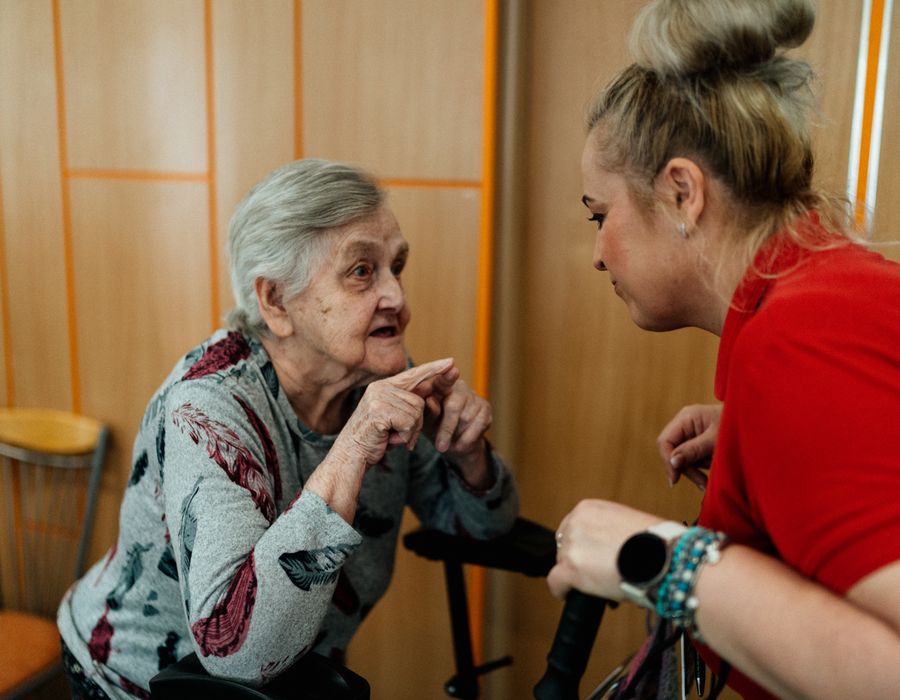
Picture a house on a quiet street with a ramp out front and six bedrooms inside. The owner, call her Grace, lives on site. She knows that Mr. Alvarez wants the radio on a Spanish station at breakfast, that Helen will refuse a shower unless you let her test the water herself, and that Frank, a retired lineman, calms down when you ask him to explain how power gets from the pole to the house. Grace has never written any of this down. She has not needed to.
Then Grace gets the flu. Her weekend relief caregiver is capable and kind, and she knows none of it.
If you own or run an adult family home or another small board-and-care home, you know this scene. This article is about the part of your residents that lives only in your head, and why getting it out is good for them, for your staff, and for you.
Small homes carry the most dementia
In Washington State alone there are nearly 2,800 adult family homes, each licensed for two to six residents, or up to eight with state approval.1 Other states use other names, like residential care homes, board and care, or personal care homes, but the model is the same: a real house, a few residents, and an owner who is deeply involved.
Here is a number that surprises people. According to CDC data, about 51% of residents in residential care communities with 4 to 25 beds have dementia, compared with 39% in communities with more than 50 beds.2 Small homes are often where people go when they need closer attention than a big building can give.
That makes life stories more important for you, not less. When a resident cannot tell you what is wrong, their history is often the best clue you have.
Behavior often has a reason
The researcher Jiska Cohen-Mansfield spent years studying agitation in people with dementia. In one study of agitated nursing home residents, each person had on average three unmet needs. The most common were boredom, loneliness, and the lack of something meaningful to do.4 Pain was often missed as well.
Look at that list again. You can only meet two of those three needs if you know what this person finds meaningful and who they like to be around. Frank does not need a coloring sheet. He needs someone to ask him about transformers. Other research has found that activities matched to a person's lifelong interests hold attention and lift mood better than activities matched only to what they can still physically do.5
To be fair, the best overview of personally tailored activities rates the evidence as low certainty, with small effects on agitation.6 It is not a cure for a hard afternoon. But in a six-bed home, small effects are something you feel every day.
In a small home, one person's knowledge is the whole system. That is a strength until the day you are sick.
Your memory is the single point of failure
Big communities lose resident knowledge through turnover. You lose it through vacations, flu season, a family emergency, or the day you finally sell the home. The more of each resident you carry in your head, the more fragile their care is when you are not there.
The fix does not need to be paperwork. It needs to be short enough that a relief caregiver will actually read it before walking into a bedroom at 7 a.m. For each resident, aim for one card:
- The name they like to be called.
- Their work and what they are proud of.
- Their people: who visits, who has died, who should never be mentioned.
- Their routine: wake time, coffee, bath or shower, bedtime ritual.
- What calms them, and what sets them off.
- Two conversation starters that always work.
Federal nursing home rules require a "life history and preferences" assessment.7 Adult family homes answer to state rules instead, and those vary. Our state rules library covers what assisted living and memory care regulations ask for in each state. But you do not need a regulation to see the value of a card that saves your weekend caregiver from a two-hour standoff over a shower.
Let the family help you build it
You do not have to write every card alone. The family that just moved their mother into your home is usually desperate to help and does not know how. Give them a job. At move-in, hand them a single page with the six lines above and ask them to fill it in together over the first week. Ask for one or two photos from the resident's working years, too: Frank in his lineman's harness, Helen at her classroom desk. A photo on the dresser starts more good conversations than any activity calendar.
Then add what you learn. Families know the past. You will quickly learn the present: that Helen now likes oatmeal even though her daughter swears she hated it, or that Frank no longer wants to hear about the job he lost when his eyesight went. The best card holds both, dated, and gets a quick update whenever something changes. A card that only describes the person they used to be can steer a new caregiver wrong.
Families are your marketing
Small homes rarely have a sales team. You fill beds through hospital discharge planners, placement agents, and above all through families who tell other families. In a small home, the owner is the communication system. That is intimate, and it is a lot of phone calls.
Families of residents say the same thing in study after study. In interviews during the pandemic visiting bans, relatives said what they wanted most was information about their person's everyday life without having to ask.3 Not lab results. Did Mom laugh today? Did Dad eat?
A small habit goes a long way: a weekly two-line note to each family, a photo of the garden, or a recording of their father explaining power lines to the new caregiver. Families who hear the good moments without asking call less in a panic, and they mention you to their friends.
How Porchlight fits a small home
Porchlight was designed for communities without spare staff hours. The resident does the talking. They tap one big button on a tablet or phone, hear a question read aloud from a gentle, fixed-order sequence, and answer. They can skip anything. For residents who find talking harder, there is a slower setting with simple-choice questions that ends warmly after two unanswered questions and leaves you a note.
From those recordings you get:
- A short briefing for each resident, with who they are and conversation starters.
- A printable door card and a first-shift card for your relief or new caregivers.
- A place to note topics to avoid.
- A private family page where relatives can listen, download, and reply with voice notes the resident can play.
For residents who can no longer tell their stories, you or the family can add stories on their behalf, marked as told by someone else. Families of residents never pay for the community plan, and pricing is set with each home, so write to us and we will talk it through.
What it will not do
It will not replace you. Nothing does. It does not detect distress or diagnose anything, and the AI's job is narrow: it transcribes and tidies what was said, and you can always hear the original. A small home also does not need software to start, so here is the free version.
Something to do this week
Pick the resident whose care depends most on what you know. Write their one card tonight, ten minutes and no more. Give it to your relief caregiver next weekend and ask afterward whether it helped. If it did, do the next resident. If you would rather have the residents tell it themselves and have the cards written for you, that is what we built Porchlight to do.
See it from the owner's chair
Walk through the staff side: a resident's stories become a short briefing, a door card and a first-shift card for whoever covers your weekend.
Explore a live demo Ask about small homesSources & notes
- Washington DSHS, long-term care residential options (adult family homes are licensed for two to six residents, up to eight with approval), and the Washington State Residential Care Council (nearly 2,800 homes). dshs.wa.gov · wsrcc.org
- CDC National Center for Health Statistics, Data Brief 454: residential care communities by size, 2020. Dementia share 51% in communities with 4-25 beds, 47% in 26-50, 39% in more than 50. cdc.gov
- Eriksson E, Hjelm K. Relatives' perspectives on encounters and communication in nursing homes during the Covid-19 pandemic: a qualitative interview study. BMC Geriatrics 2022;22:706. PubMed 36008775
- Cohen-Mansfield J, Dakheel-Ali M, Marx MS, Thein K, Regier NG. Which unmet needs contribute to behavior problems in persons with advanced dementia? Psychiatry Research 2015. doi:10.1016/j.psychres.2015.03.043
- Kolanowski AM, Litaker M, Buettner L. Efficacy of theory-based activities for behavioral symptoms of dementia. Nursing Research 2005;54(4):219-228. doi:10.1097/00006199-200507000-00003
- Möhler R, et al. Personally tailored activities for improving psychosocial outcomes for people with dementia in long-term care. Cochrane Database of Systematic Reviews 2023. Low-certainty evidence. doi:10.1002/14651858.CD009812.pub3
- 42 CFR 483.20(b)(1), Resident assessment: a facility must assess "a resident's needs, strengths, goals, life history and preferences." This applies to federally certified nursing homes; assisted living is regulated by each state. eCFR
Scenarios marked as illustrative are not real named individuals. Porchlight does not fabricate customers, testimonials, or outcome metrics. Podcast quotes are lightly trimmed of filler words; ellipses mark the cuts.