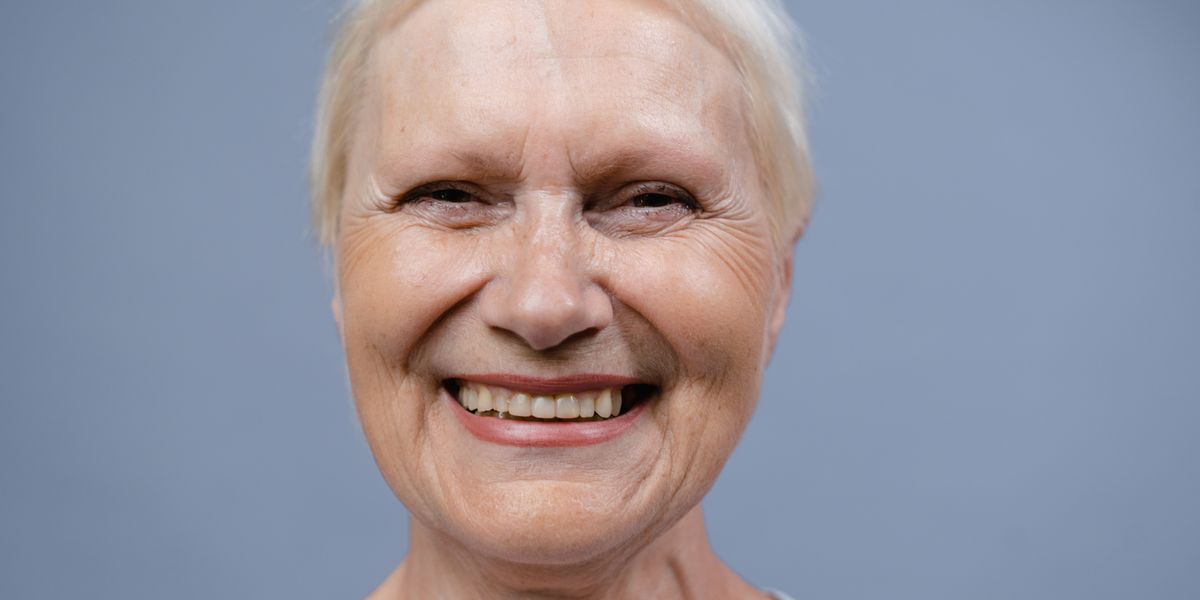
Say his name is Luis, and he has worked in housekeeping at the same community for nine years. He has outlasted three executive directors and more aides than he can count. He knows that the woman in 212 likes her blinds half open, that the man in 118 was a high school football coach and will tell you about the 1974 season if you have five minutes, and that the woman at the end of the east hall doesn't like anyone touching the photos on her dresser, not even to dust.
Nobody asked Luis to learn any of that. He learned it because he says good morning to the same people every day.
This piece is for Luis, and for you if you cook, serve, clean, fix, drive or sit at the front desk in a senior community. You are not on the care plan. You are, very often, the most consistent part of a resident's day.
You are the steady faces
Nursing and residential care facilities employ about 105,000 institutional cooks, 124,000 housekeepers and 54,000 maintenance workers, at median wages of roughly $38,000, $35,000 and $46,000 a year.1 Those are not glamorous numbers, and the work is physical and often invisible. But in many buildings, the dining room server and the housekeeper on a hall have seen residents more days in a row than the aide on today's schedule, simply because care staff turn over so fast. In nursing homes, average annual turnover among nursing staff runs around 128 percent by one payroll-based measure.2
A large English study of staffing and quality in care homes put it plainly: good personalized care depends on stable staff and on enough of them "to develop 'familial' relationships" and to know residents.3 Families notice who those familiar people are. Residents certainly do.
Care plans are written by nurses. A lot of home is made by the person who brings the coffee.
Small talk is not small
When researchers studied agitated residents in nursing homes, the most common unmet needs were boredom, loneliness and the need for something meaningful to do.4 When the same research group looked at which kinds of help were easiest to actually deliver, food and drink and one-on-one socializing had the fewest barriers.5 In other words, two of the simplest ways to meet a resident's need are things the dining room and the hallway already do all day.
"Good morning, Coach. Think we'll ever see a season like '74 again?" takes four seconds. It tells a man that someone knows who he is. For a resident who doesn't get many visitors, that might be the best conversation of the day.
One sentence is enough
You do not need a life story book. You need one true sentence, the kind that fits on a door card:
- What they like to be called. "Coach." "Mrs. Lindqvist." "Bea, never Beatrice."
- One thing they love to talk about. A team, a hometown, a job, a garden, grandkids.
- One thing to avoid. Don't move the photos. Don't mention her late husband at dinner. He hates being called "buddy."
For dining staff, add one more: a food that means something. Plenty of residents have a dish tied to a whole life: a Sunday pot roast, tamales at Christmas, a particular kind of rye bread from a bakery that closed fifty years ago. A cook who knows that can make a resident feel at home with one plate.
And if you learn something new, pass it on. A detail that only you know leaves with you on your day off. Tell the activity director. Tell the aide. Tell the family when you see them in the lobby: "Your mom was telling me about her garden in Spokane." Families say they want to hear about everyday life without having to ask.6 You are often the one who has it.
The front desk and the drivers
If you work the front desk, you see who comes and who doesn't. You know which residents wait in the lobby on Sunday afternoon for a son who visits once a month, and which ones get a call every evening at six. If you drive the community van, you get twenty minutes alone with residents on the way to appointments, which is more uninterrupted time than most aides get all week.
Both are chances for a real conversation. A driver who knows a resident grew up on a wheat farm can point out the harvest on the drive to the clinic. A receptionist who knows a resident's granddaughter just started college can ask how she's doing. Those moments add up to a place that feels like it knows you.
When someone you knew is gone
Here is something nobody puts in a job description: in senior living, you will lose people you have grown fond of. The man who told you about the 1974 season will not be at breakfast one day. Staff in every role grieve, often quietly, and often without anyone noticing that you had a relationship too.
One thing that helps families, and can help staff, is having something of the person left. In a survey of bereaved families whose relatives had made a guided legacy document, 78 percent said it helped them through grief.7 If a resident recorded their stories, their family keeps them. Sometimes it means a lot to a family to hear that the housekeeper remembers him too. Tell them.
What you should not be told
It is worth saying clearly: you do not need a resident's medical history, diagnosis or private stories, and a good program will not give them to you. The person in 212 gets to decide what the whole building knows about her. Many residents are happy for everyone to know they were a teacher or that they root for the Mariners. Fewer want their family history known by the person fixing the sink. A door card should hold conversation, not secrets.
Where Porchlight fits
Porchlight starts with the resident telling their own stories. They tap one button on a tablet and answer questions read aloud, and they can skip anything. From those stories, the care team gets a short briefing, and every resident can have a printable "About me" door card with the kind of detail anyone can use: a line in their own words, what to ask them about, the people who matter to them, and a good way to say hello. That card is meant to be read in passing, by anyone who walks in, including you. Because everyone sees it, the resident approves their introduction before the door card is used. Topics to handle gently go on a separate first-shift card that stays with staff.
Consent comes first: there is a paper consent form with an opt-out, and a page that explains who sees what. Private material stays with the care team, the family and the resident.
Porchlight is not going to make you a caregiver, and it is not meant to. It just tries to give everyone in the building what Luis already has after nine years: a reason to say a person's name and ask about something they love.
Something to try tomorrow
Pick one resident you see every day and know almost nothing about. Tomorrow, ask one easy question while you work. "Where did you grow up?" "What did you do before you retired?" Then use the answer the next day. Notice how the next good morning feels.
If you are a manager reading this, try the bigger version: at your next all-staff meeting, ask dining, housekeeping and maintenance to share one thing they know about a resident that the care team might not. You will probably be surprised by how much the building already knows, and by how little of it has ever been written down anywhere a new aide could find it.
Give everyone in the building one true sentence
See a resident's door card and briefing in the live demo.
Explore a live demo Talk to usSources & notes
- U.S. Bureau of Labor Statistics, OEWS May 2025, NAICS 623: institutional cooks 105,400 employed (median $37,750); maids and housekeeping 123,910 ($34,570); general maintenance 54,420 ($46,360). bls.gov/oes
- Gandhi A, Yu H, Grabowski DC. Health Affairs 2021;40(3):384-391. doi:10.1377/hlthaff.2020.00957
- Spilsbury K, et al. StaRQ: staffing and quality in English care homes. NIHR Health and Social Care Delivery Research 2024;12(8). doi:10.3310/GWTT8143
- Cohen-Mansfield J, et al. Psychiatry Research 2015. doi:10.1016/j.psychres.2015.03.043
- Cohen-Mansfield J, et al. Barriers to delivering nonpharmacological interventions. Journal of the American Medical Directors Association 2012;13(4):400-405. doi:10.1016/j.jamda.2011.07.006
- Eriksson E, Hjelm K. BMC Geriatrics 2022. PubMed 36008775
- McClement S, et al. Dignity Therapy: family member perspectives. Journal of Palliative Medicine 2007;10(5):1076-1082. PubMed 17985964
Scenarios marked as illustrative are not real named individuals. Porchlight does not fabricate customers, testimonials, or outcome metrics. Podcast quotes are lightly trimmed of filler words; ellipses mark the cuts.