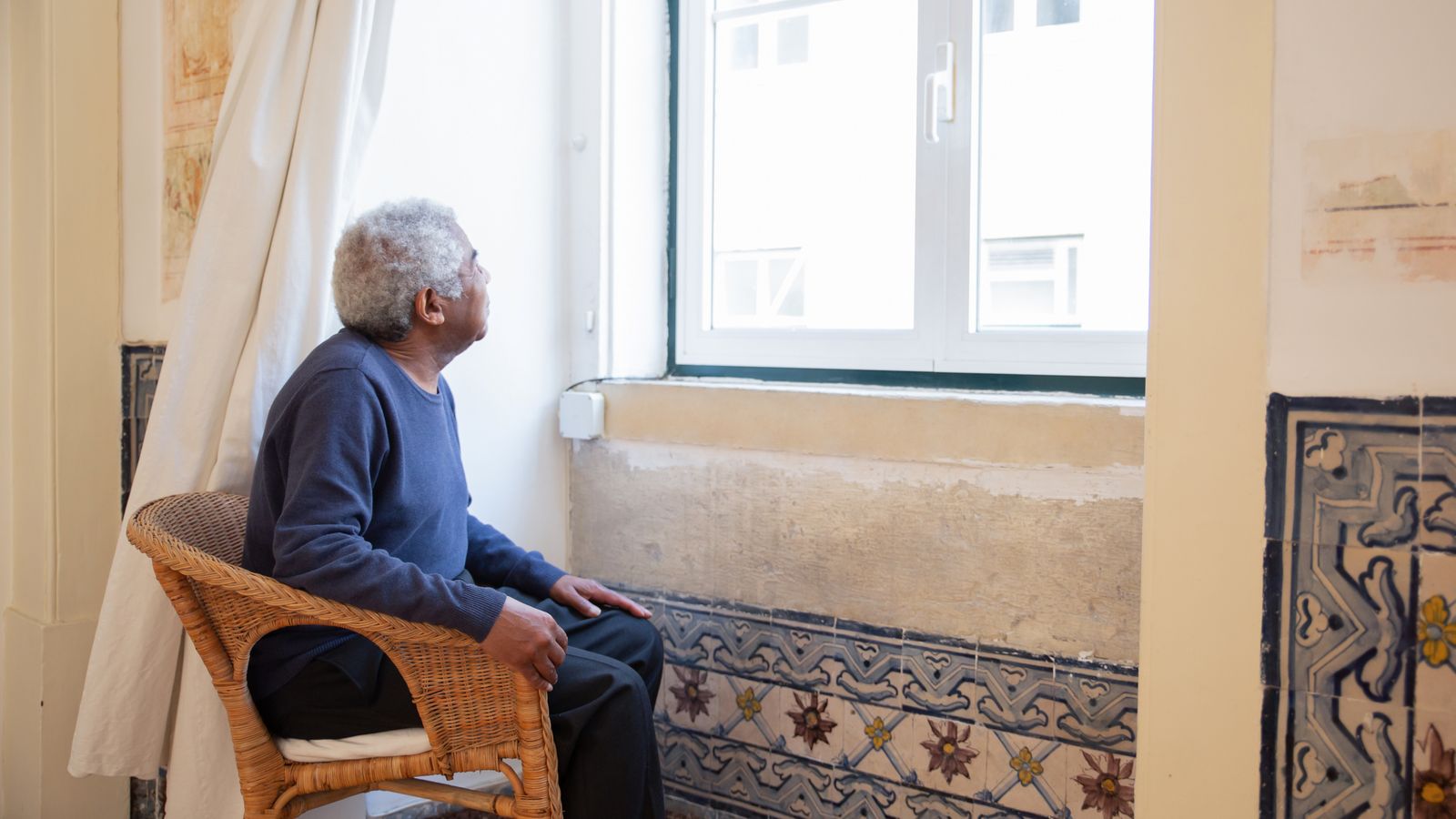
Say her name is June, and she has lived on your memory care neighborhood for eight months. Most afternoons she stands by the window near the nurses' station with her purse on her arm, waiting for someone to drive her home. The staff who know her best have figured out that if you ask her about the dress shop she ran in Tacoma, she will sit down and tell you about fabric for twenty minutes, and the purse will end up on the chair beside her.
The staff who don't know her try to steer her back to her room. It never goes well.
June is illustrative. The pattern is not. This piece is for you, the memory care director or program coordinator: the person who runs the neighborhood where the story matters most and where it is hardest to get.
Where identity is the work
Dementia is not a niche in senior living. About 44 percent of assisted living residents live with Alzheimer's or another dementia, and in small communities of 4 to 25 beds the share is 51 percent.1 Memory care units make up about 255,000 of the country's senior housing units.2 The families you serve tend to be the most anxious in the building, and the residents are the least able to tell a new aide who they are.
Tom Kitwood's argument, decades old now and still the foundation of person-centered dementia care, is that a person's wellbeing in dementia depends on the people around them sustaining her personhood: treating her as someone with a history, not as a set of symptoms.3 That is a theory, not a trial result. But nearly every person-centered care trial since has been built on it, and every memory care director I have met could give you a list of moments where it was obviously true.
The point of the story is not to bring back who she was. It is to help the people around her meet who she is.
Past and present: the "set in stone" trap
There is a real risk in life story work, and memory care is where it bites. In the largest UK study of life story work, focus groups worried about people being "set in stone" by an old document. A woman who loved to cook may now be frightened by a hot stove. A man who was proud of his golf game may be upset by a club he can no longer swing. The consensus was to keep the story updated and never let it take precedence over what the person expresses now.4
A Swedish analysis of 30 life story templates found they tended to produce one of two identities: "a person before symptoms" or "a patient with dementia."5 Neither is June at 3 p.m. on a Tuesday. The useful story includes both: what she loved, and what works with her today. Dress shop, yes. Steering her to her room, no. Coffee with cream, and only after her hair is done.
Family voices: what the evidence actually says
Many memory care teams have tried some version of playing a resident a recording from family. It has a name in the research, simulated presence therapy, and it deserves an honest summary.
In the best-known trial, 54 nursing home residents with dementia heard a family-recorded "phone call" about cherished memories, compared with a placebo recording and usual care. The family recording did better than placebo for happy facial expressions, and staff logs and weekly interest ratings favored it. But on most direct observations of agitation and withdrawal there was no significant difference, and 5 of the 54 residents refused it more than half the time.6 A Cochrane review found only three trials, 144 people in all, and rated the evidence very low certainty: not enough to draw any conclusion about effectiveness.7
Some residents become more upset by a familiar voice: they search for the caller, ask to go home, or grieve again. So family voice messages should be offered as connection, never as treatment. Watch how each person responds, let her choose whether to listen, avoid bedtime and sundowning hours if they unsettle her, and stop if it distresses her. Never use a cloned or synthesized voice.
Getting a story from someone who can't easily tell it
The hardest part of your job is that many of your residents can no longer sit through an interview. That doesn't mean they have nothing to say. Simpler questions often still work: "Did you like the beach or the mountains?" instead of "Tell me about your favorite vacation." Long silences can be thinking time, not refusal. And repeated questions should feel like a conversation, never a memory test. Phrases like "Do you remember...?" are worth retiring entirely. Our guide to reminiscence distress safeguards goes into the details.
When the person can no longer tell her own story at all, the people who love her still can. Families and long-time staff hold pieces of it. Those proxy stories are valuable, as long as everyone knows they are other people's memories of her, not her own words. See life stories by proxy for how to gather them.
Your families need to know she is known
Placement rarely ends a family's distress. In one JAMA study, caregivers' depressive symptoms were the same after their relative moved into a facility as before, and nearly half were at risk of clinical depression.8 A synthesis of qualitative studies found families feel loss, guilt and relief at once, and want to keep their relationship with their person and build real ones with staff.9
What helps them most is ordinary news. Relatives during the pandemic visiting bans said they wanted to hear about everyday life without having to ask.10 "June told us about the bridal season at her shop" is that kind of news, and it tells a daughter something no activity calendar can: her mother is known here.
Where Porchlight fits in memory care
I spent a lot of time on later-stage design, partly because people who know dementia care far better than I do were generous enough to tell me where the first version fell short.
Each resident has a stage setting: early, middle or later. In the early stage, a resident taps one button and answers questions read aloud in a warm recorded voice, in a fixed order that starts gentle; after a story and a few quiet seconds the next question comes on its own, and speaking cancels it. In the middle stage the pause is longer and comes with a gentle nudge. At the later stage the session is paced by a partner sitting with her. Questions come in either/or and yes/no versions, and after two unanswered questions the session ends with a warm close and a note to staff, rather than asking into silence forever.
Family and staff can add proxy stories, marked as such, so a resident who can't record still gets a briefing her aides can use. There is also a "with partner" flag, so a partner's words stay out of the resident's own words. Staff get the briefing, the door card and a first-shift card, with topics to avoid on her profile. Families can listen, download, suggest questions, and send voice notes their person can play, with staff deciding when that's a good idea.
And what it does not do: Porchlight does not detect distress, does not diagnose, and is not therapy. It will not tell you a resident is upset. Your staff will. It is there so that the aide who has never met June knows to ask about the dress shop.
Something to try on your neighborhood this week
Pick the resident whose afternoons are hardest. Ask her family for one story and one present-day comfort. Put both on a card her aides will see: "Ran a dress shop in Tacoma for 30 years; ask about bridal season. Settles with coffee after her hair is done." See what the next week of shift notes looks like.
Help every aide meet who she is today
See later-stage settings, proxy stories and the family voice loop in the live demo.
Explore a live demo Talk to usSources & notes
- CDC NCHS Data Brief 506 (2022) and Data Brief 454 (2020, dementia share by community size). cdc.gov
- NIC MAP, How much senior housing and care inventory exists in the U.S. (1Q2022: memory care 255,100 units). nicmap.com
- Kitwood T. Dementia Reconsidered: The Person Comes First. Open University Press, 1997.
- Gridley K, et al. Health Services and Delivery Research 2016;4(23). doi:10.3310/hsdr04230
- Möllergren & Harnett. Analysis of 30 Swedish life story templates. Dementia 2024. doi:10.1177/14713012231224545
- Camberg L, et al. Evaluation of simulated presence. Journal of the American Geriatrics Society 1999. PubMed 10203120
- Abraha I, et al. Simulated presence therapy for dementia. Cochrane Database of Systematic Reviews 2017, updated 2020. PubMed 32311774
- Schulz R, et al. JAMA 2004. PubMed 15328328
- Graneheim UH, et al. Meta-ethnography of family caregivers' experiences of relocating a relative with dementia. Scandinavian Journal of Caring Sciences 2014. PubMed 23578033
- Eriksson E, Hjelm K. BMC Geriatrics 2022. PubMed 36008775
Scenarios marked as illustrative are not real named individuals. Porchlight does not fabricate customers, testimonials, or outcome metrics. Podcast quotes are lightly trimmed of filler words; ellipses mark the cuts.