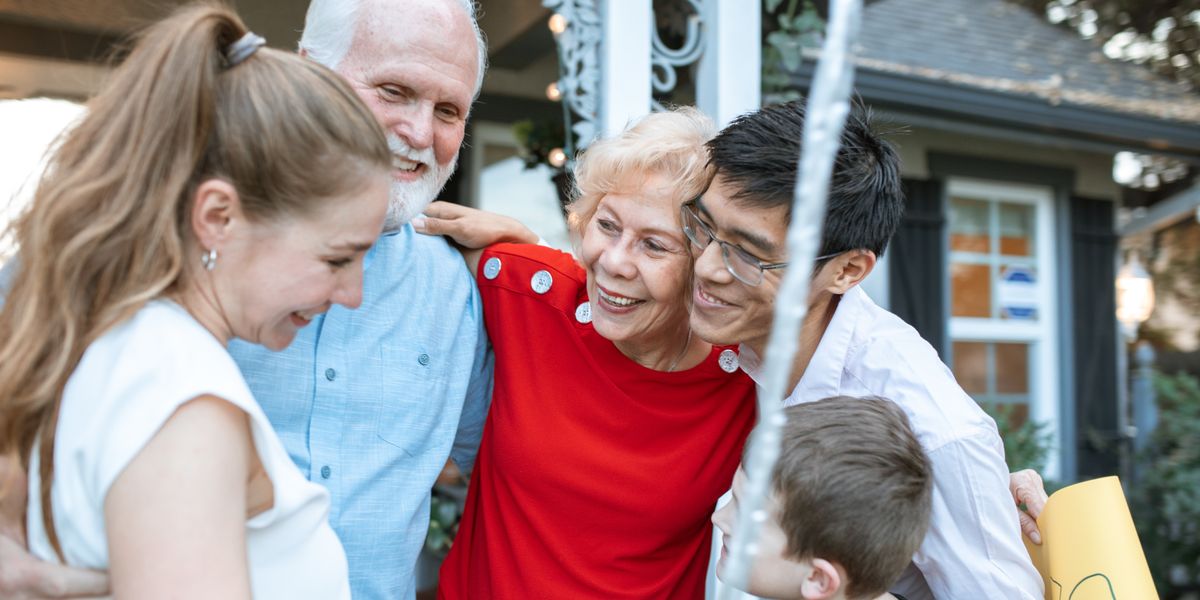
Not long ago I took my daughter to a carnival at an assisted living community near us. They invite the neighborhood kids, and there was a dunk tank, which made her day. I spoke with some of the residents. One woman told me plainly why she had moved in. Her son had come home and found her on the floor after a heart attack.
“He didn't know what to do. He couldn't handle anymore having her at home, knowing that he was ultimately responsible, but he couldn't be there 24-7. People move into these facilities when they do need 24-7 care.”
I told that story to Dr. Jeff Armstrong when I was a guest on The Aging Well Podcast, because it is the story of almost every family I talk to. Nobody moves a parent into assisted living because it is easy. They do it because the alternative stopped being safe, and because one person, however much they love someone, cannot be awake and present every hour of every day.
The guilt is real, and it is not a verdict
My mother was a hospice nurse for twenty years, and she talked with me about her work a lot. Elder care is hands-on, exhausting work, and when it falls on one family member it can swallow them.
“Some people have their lives destroyed because they have to take care of an aging loved one. You know, it takes over their life... No matter how much you love that person, the caregiver still has their limits in terms of what they can do.”
The closest comparison I have is childcare. Dropping a child at daycare can be a huge relief, it is expensive, and you still feel guilty that you are not the one there. Adult children describe the same mix when a parent moves into a community: relief that someone is there at 3 a.m., and a nagging voice saying you have locked them away somewhere and never visit.
That voice is not evidence that you did the wrong thing. It is evidence that the relationship still matters to you. The useful question is not "should I feel guilty?" but "what does staying close look like now?"
Moving a parent into care changes who does the lifting. It does not have to change who they are to you.
Why the weekly phone call runs dry
Long-distance families usually lean on a phone call. It is a good habit. It also tends to shrink over time into the same four questions: how are you feeling, how was lunch, did the doctor come, is the room warm enough. Those are care questions. They matter, but they do not give either of you much to hold onto.
There are practical reasons it gets harder, too. Your parent might not be able to manage a phone anymore. Hearing loss makes calls tiring. And a lot of people from that generation simply were not raised to open up.
“Your loved one might not be able to use a phone. They might not be at that stage. Or, you know, sometimes the older generations, they really don't like opening up very much. So this is a way for people to have a real meaningful conversation that will continue over time.”
The conversation you will wish you had recorded
Jeff shared something on the show that has stayed with me. When his mother was in the hospital in her last days, she was on the far side of the country from him, and her four kids lived in four different states.
“Through the use of an iPad, we were able to all communicate with or see or talk with her. She was able to see us. And yet we don't have a recording of that.”
Video calls bridge the distance in the moment. They disappear when you hang up. If there is one change I would urge on any long-distance family, it is this: start keeping the stories, not just having the calls. The sound of your parent's voice telling you about the summer they worked on a fishing boat is the thing you will go looking for later.
Six ways to stay close from far away
- Trade status questions for story questions. "How was lunch?" gets one word. "What did your mother cook when money was tight?" can get twenty minutes. Keep a short list by the phone. Our holiday table question cards work just as well for a Sunday call.
- Record, with permission. Ask first, then use the voice memo app on your phone. Say the date at the start. Do not edit out the rambling; the rambling is the part that sounds like them.
- Send things they can hold. Printed photos with a line written on the back, a card, a recorded message a staff member can play for them. Something that stays in the room after you hang up.
- Give the staff something to talk about. Tell the activity director and the aides one or two true things about your parent: the job they loved, the team they root for, the grandchild they brag about. A caregiver who knows that your dad drove a bread truck for thirty years has a way in on a hard morning.
- Ask for small, specific updates. "Did she go to music on Tuesday?" is easier for busy staff to answer than "how is she doing?" and tells you more.
- Plan visits around a project. Go through a photo box together, or sit and record one long conversation. Visits with a shared task are easier for everyone, especially if memory is slipping.
What a good last chapter looks like
When my mother talked about her hospice work, she would often say, "We had a really good death." In most lines of work that sentence makes no sense. In hospice it means something specific.
“A good death would be if you're surrounded by your family, you're able to enjoy yourself as much as possible when you're in final days, you feel useful, you feel safe, you feel loved.”
Useful, safe, loved. A good community handles a lot of the safe part. The useful and loved parts still run through family, even from four states away. Being asked about your life, and knowing someone wants the answer, is one of the plainest ways to feel both.
How Porchlight helps a long-distance family
I built Porchlight for exactly this gap. A resident taps one big button on a tablet or phone, hears a question about their life read aloud, and talks. The questions come from a curated life-story sequence that starts light and stays away from the hard stuff. After a story and a few quiet seconds, a short countdown starts and the next question follows; if they keep talking, it waits, and staff can switch that off for any resident. No passwords, no typing, nothing to learn.
What they say is recorded and transcribed, and it goes two places. Their care team gets a briefing so the people in the building know who they are caring for. And family gets a private page where you can:
- Listen to each story in your parent's own voice, whenever you have ten minutes, wherever you are.
- Download the recordings so they are yours to keep.
- Reply with a voice note that your parent can play back, so the conversation goes both ways.
- Suggest questions, the kind only family would think to ask. As I put it on the show: “Dad, tell me about the time that you got drunk at the wedding,” or something like that.
Communities can also pull story highlights into a newsletter for families, so you hear about the people your parent lives with, too. And if you want something for the shelf, families can order an optional printed memory book of the stories, in softcover or a large-print hardcover.
As heard on The Aging Well Podcast
I talked with Dr. Jeff Armstrong for an hour about long-distance families, the first shift with a stranger, and why being known matters as we age. Read the episode notes and highlights, or watch the full episode on YouTube.
If your parent's community already uses Porchlight, family access is free; residents' families never pay. If their community does not use it, there is a family plan you can start yourself, with a 14-day free trial. Either way, Porchlight is a connection tool, not a medical one. It will not replace your calls or your visits. It just gives them more to work with, and it keeps what gets said.
Hear their stories from wherever you are
Start a family plan for a parent whose community does not use Porchlight yet, or take the family tour to see what the private family page looks like.
Start a family plan Take the family tourSources & notes
- Patrick Donahue on The Aging Well Podcast with Dr. Jeff Armstrong, Episode 499, "The Stories That Make Us: Why Being Known Matters as We Age," October 2026. youtu.be/d-E4wfpVCQo. Quotes are verbatim, with filler words removed and marked by ellipses.
- National Institute on Aging, Getting Started with Long-Distance Caregiving, nia.nih.gov: practical guidance on coordinating with care staff and staying involved from far away.
The suggestions above are general guidance from a family's point of view, not medical advice. Porchlight is a conversation and enrichment tool, not a clinical intervention. Porchlight does not fabricate customers, testimonials, or outcome metrics.