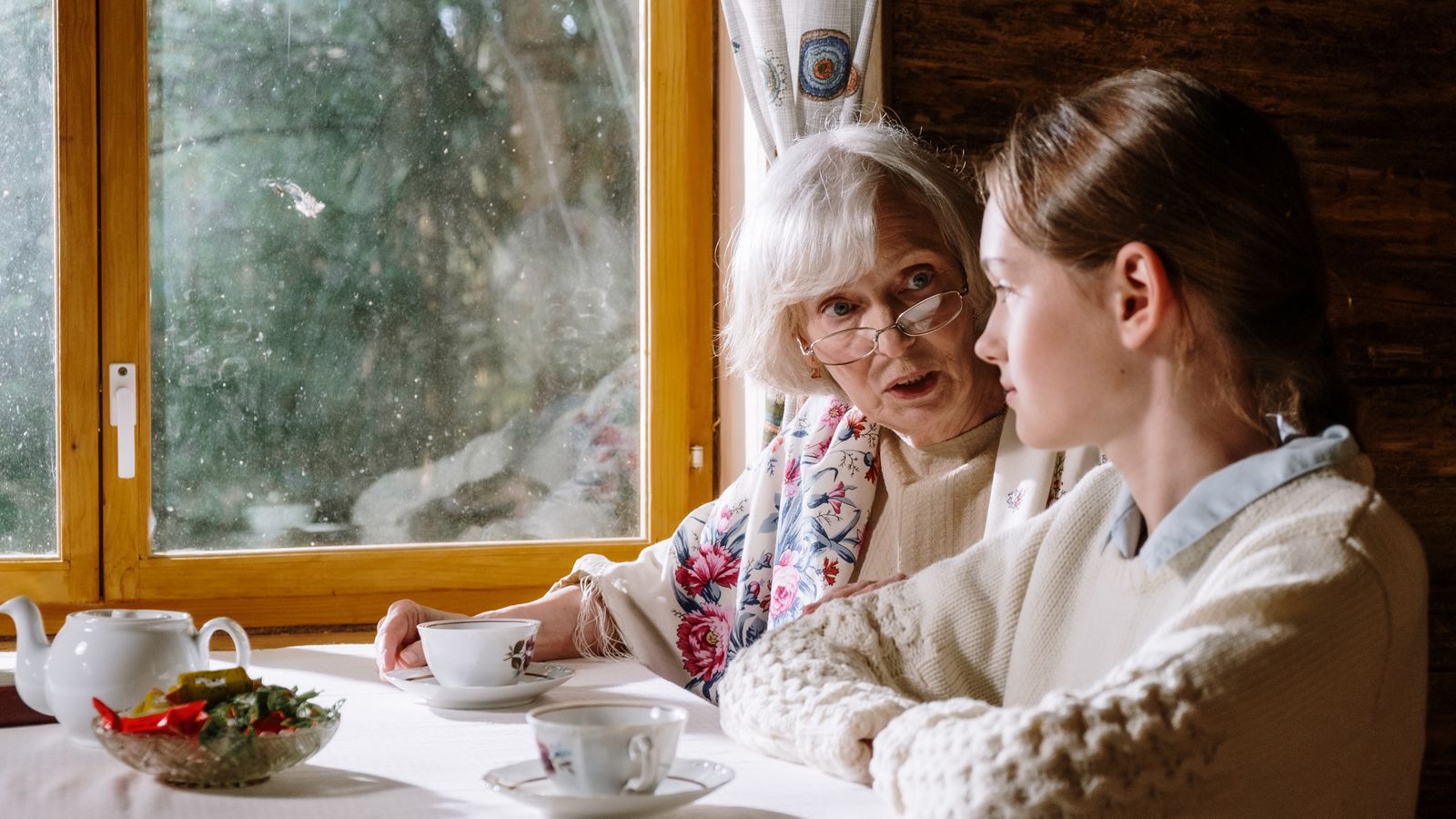
I build a product whose whole job is to help older adults tell their life stories. My own mother will not use it.
I said so on The Aging Well Podcast when Dr. Jeff Armstrong asked what makes someone want to tell their story. It is a little embarrassing to admit, but it is also the most useful thing I know about the subject, because it is the same wall so many families hit.
“I've tried to convince my own mother to use the product and she's always refused. She says, I don't know what to say.”
If your parent says the same thing, you are in good company. Here is what I have learned about why it happens, and what tends to work.
Why people say they have nothing to say
Almost nobody actually has nothing to say. What they have is one of a handful of very human reasons not to start.
- They think their life was ordinary. People who raised kids, held a job for thirty years and kept a house running often assume none of it is interesting. To a grandchild, all of it is.
- They are shy. Talking about yourself at length feels like bragging to a lot of people from that generation.
- They do not know where to start. "Tell me your life story" is an impossible question. It is too big to answer.
- It feels like an ending. This one is harder to say out loud.
“People need to be motivated to tell their story. Some people might be in denial about their aging process and, you know, setting down a memoir like this might feel like the end for them.”
If a parent hears "let's record your life story" as "let's prepare for your funeral," of course they will say no. The fix is to change what you are asking for.
The thing that actually motivates people
In my experience the strongest motivation is not a reason that lives inside the older person. It lives in you.
“Someone will want to tell their story if their loved ones tell them how important it is to them. A lot of people will get shy or bashful. They'll think, I don't have anything to say.”
So say it plainly. "I realized I don't know how you and Mom met, and I want the kids to hear it from you." "I want to know what you were like at my age." That is not a memoir project. That is your kid asking you a question, and most parents find that very hard to refuse.
"Tell me your life story" is too big to answer. "What was your first car?" is not.
Start low-key, and stay positive
The first questions decide whether there is a second session. Keep them small, concrete and pleasant. When I wrote the question sequence for Porchlight, this was the rule I followed most closely: begin with easy things, put people at ease, and do not dwell on anything negative. Loss, illness and regret will come up on their own if they want to. You do not need to go looking for them.
A few habits that help:
- Ask about things, not feelings. A kitchen, a car, a street, a dog. Feelings come out on their own once the picture is in their head.
- Say "tell me about," not "do you remember." "Do you remember" is a quiz. "Tell me about" is an invitation, and it does not punish a fuzzy memory.
- Let them skip. Any question, any time, no explanation needed. Knowing they can pass makes people more willing to answer.
- Keep the first session short. Fifteen minutes that end on a laugh beat an hour that ends in fatigue.
- Follow the spark. When their voice changes, stay there. The best story is usually one question off from the one you planned.
The spark is usually closer than you think
Jeff told a story on the show that captures this perfectly. Early in his marriage he was at dinner with a friend of his wife's family who had pitched in the major leagues. His brother-in-law, a big fan of the team the pitcher was famous for, spent the evening talking baseball with him. Jeff sat quietly until the pitcher turned to him and asked if he even liked baseball. Jeff said he did, but he was more of a Pirates fan.
“He just lit up. He was like, you know, I played for the 1968 Pirates... It was just like this whole other dimension of his life that probably most people didn't even know about was just pouring out.”
Everyone has a 1968 Pirates. It is rarely the headline of their life. It is the side door, the summer job or the hobby or the city they lived in for two years, and nobody asks about it, so it never comes out. Small, specific questions are how you find the side door.
Twelve starter questions that open the door
These are deliberately easy. Use them on a call, at the kitchen table, or on a drive.
- Tell me about the street you grew up on.
- What did your house smell like on a holiday morning?
- What was your first job, and what did you spend the first paycheck on?
- Tell me about your first car.
- Who was your best friend when you were ten? What did you two get up to?
- What song takes you straight back to being a teenager?
- Tell me about how you met Mom (or Dad).
- What was a meal your mother or father made that nobody else could get right?
- What is the farthest you ever traveled when you were young?
- Tell me about a teacher or boss who believed in you.
- What did you do on a Saturday night when you were twenty?
- What is something you were really good at that we might not know about?
For more, try our reminiscence questions for seniors or the printable holiday table question cards.
Record it, even if it rambles
Jeff and his family spent about five days with his dad and stepmother over a Christmas break, and one of the things they did was play a card game where everyone answers a question. They learned things about each other they had never heard. A few weeks later his dad passed away in his sleep.
“I was so grateful that we had done that and we got that information. But it would have been so cool to have recorded those responses, because I don't remember a lot of the questions and I don't remember the responses.”
You do not need anything fancy. I said this on the show and I mean it:
“Even if you don't use Porchlight... just generate some questions. Just find some interview and then record it and write it down and see if it helps you, see what the process is like. Anyone can do that... It would mean a lot to your loved ones.”
Ask first. Set your phone face down nearby and use the voice memo app. Say the date and who is talking. Keep everything, even the tangents. The voice is the part you will want later.
As heard on The Aging Well Podcast
I talked with Dr. Jeff Armstrong about why being known matters as we age, what makes someone want to tell their story, and how families stay close from far away. Read the episode notes and highlights, or watch the full episode on YouTube.
Where Porchlight fits
Some parents will open up to a grandchild across the table. Others find it easier to talk when nobody is watching them. That second group is who I built Porchlight for.
Your parent taps one big button on a tablet or phone and hears a question read aloud. The questions follow a curated life-story sequence, the same low-key-first approach described above, and they can skip any one of them. After they finish a story and go quiet for a few seconds, a short countdown starts and the next question follows; if they start talking again, it waits. There is nothing to type and no password to remember.
Everything they say is recorded and transcribed, and family gets a private page to listen in their own voice, download the recordings, reply with a voice note they can play, and suggest new questions of your own. If they live in a community that uses Porchlight, the care team gets a short briefing too, so the people who help them every day know who they are. Families can also order an optional printed memory book of the stories, in softcover or large print.
Porchlight is a conversation tool, not therapy. Research on reminiscence finds benefits that are real but modest,2 and I would rather you try it because you want to hear the stories than because of a promise about health. As I told Jeff at the end of the episode, the honest advice is simple:
“Just try it out, right? I mean, if it doesn't work for you, you don't have to do it. But hopefully you will find that your loved one has a lot of story to tell.”
Let them tell it in their own voice
If your parent's community already uses Porchlight, family access is free. If not, start a family plan with a 14-day free trial.
Start a family plan Take the family tourSources & notes
- Patrick Donahue on The Aging Well Podcast with Dr. Jeff Armstrong, Episode 499, "The Stories That Make Us: Why Being Known Matters as We Age," October 2026. youtu.be/d-E4wfpVCQo. Quotes are verbatim, with filler words removed and marked by ellipses.
- Woods B, et al. Reminiscence therapy for dementia. Cochrane Database of Systematic Reviews, 2018. Benefits are modest and depend on setting. Porchlight is an enrichment and connection tool, not a clinical intervention.
Starter questions are general suggestions, not a clinical protocol. Porchlight does not fabricate customers, testimonials, or outcome metrics.